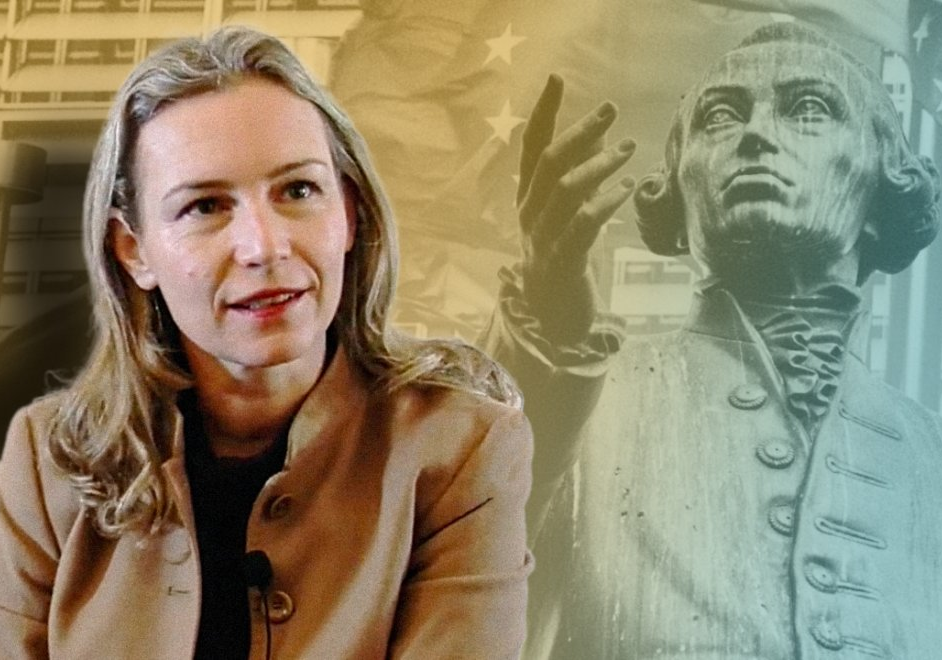
How can we move beyond the double deadlock of state socialism and market capitalism? For Lea Ypi, returning to Kant and the Enlightenment offers a perspective to provide a new ground to freedom as social responsibility, and to open up towards a cosmopolitan horizon against the authoritarianism of profit.
The female silhouette – understood as the body’s visible form and socially perceived appearance – has long been shaped by social norms. In the age of social media, these norms are intensifying, prompting, in response, the rise of so-called “body-positive” movements.
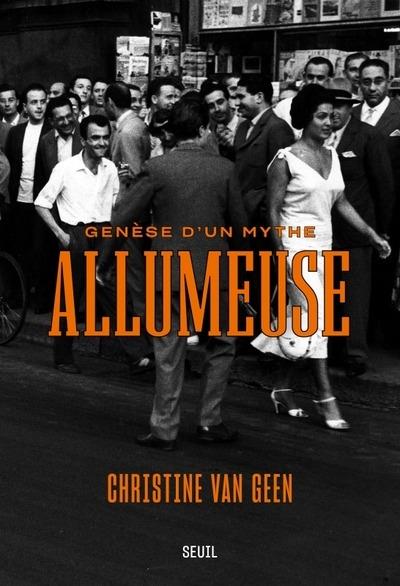
From Salomé to Lolita, representations of “temptresses” haunt male fantasies. They entail a woman who has said “yes” before she has even been asked anything. And women who “fire up” men’s desire must pay the price.
How do children construct their racial identity? Based on a groundbreaking study of children from so-called “mixed” couples, Solène Brun explores the processes of racialization within family structures.
In a stimulating and well-informed essay, Sandra Hoibian refutes the idea that French society is becoming fragmented and suggests ways to measure a vague concept: social cohesion.
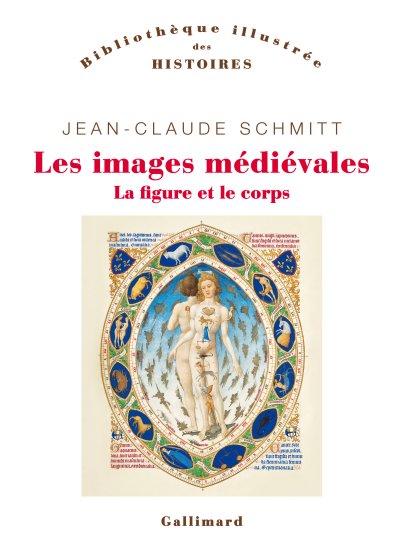
In this collection of essays, Jean-Claude Schmitt continues his examination of medieval images. Considering the topic from a semantic, historical, and artistic perspective, he explores how the medieval West thought about images and, at times, through images.
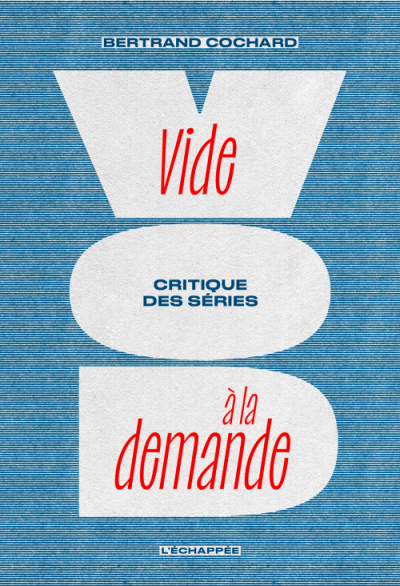
Digitally distributed television series are one of the key forms of contemporary entertainment. By analyzing this distinctive form of consumption, it is possible to explain these consumers’ relationship to time, narratives, and decision-making.
Drawing on a socio-historical study of the construction of astronomical observatories on the island of Hawai‘i, Pascal Marichalar shows that scientific policies can no longer be considered separately from their ecological and social impacts.
Popular sovereignty and the rule of law are inseparable: the idea that there could be “illiberal democracies” is groundless and plays into the hands of populists.
The American civil rights movement was more complex than is generally realized. Olivier Mahéo reconstructs its story by considering the marginalized voices and internal conflicts that are often overlooked.
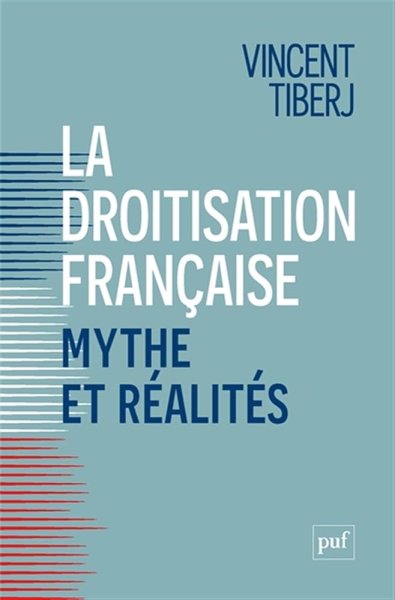
Is France heading to the right, as everyone seems to think? According to Vincent Tiberj, it all depends on how this rightward turn is defined. For now, the French prefer the left’s values.
The international and industrialized market for used or secondhand clothes—known in French as “fripes” - is not a genuine alternative to “fast fashion”. Rather, it preserves, pursues, and reproduces economically, socially, and symbolically the characteristics of the market for new clothes.
Primitive societies, Lévy-Bruhl explains, are on the lookout for signs of catastrophes, though they are unpredictable. Since we, too, are in a constant state of alert, this insight should inspire us.
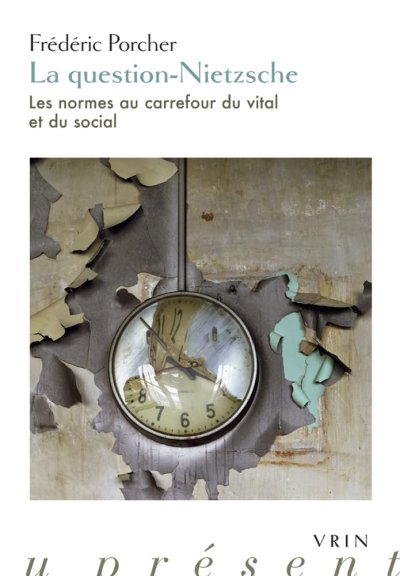
Can Nietzsche be considered a social thinker? Straddling social critique and critique of the social, French and German interpretive traditions that embrace Nietzsche make it necessary to revise the hasty conclusions of Marxists and anti-postmodernists.
In their recent research about Israeli politics, Noam Gidron and his coauthors explore the country’s affective polarization, the support for the judicial overhaul, Likud’s populism, and the relations between them.
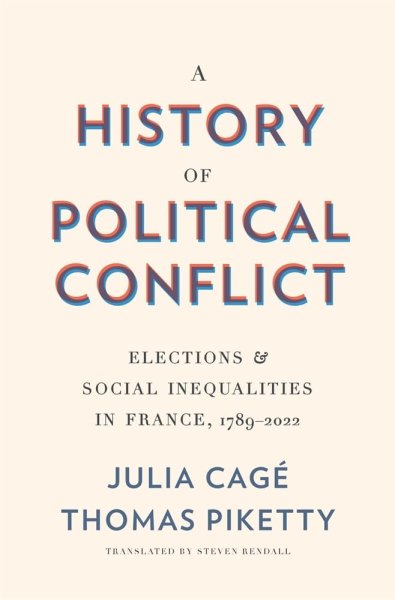
Julia Cagé and Thomas Piketty’s economic history of political conflict in France is a defense of bipartition: The Left-Right divide, which is the foundation of our democracy, has enabled social progress. We must therefore work to restore it.
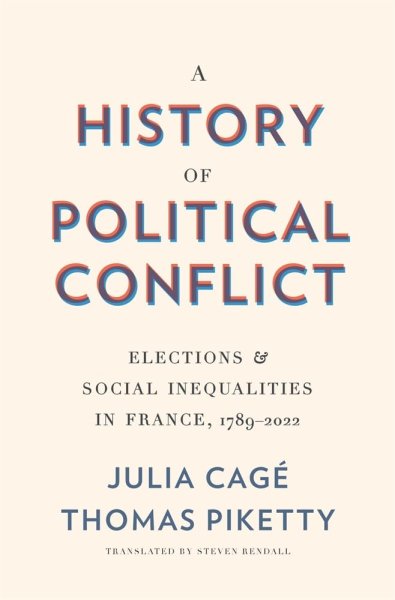
In his academic reading of Julia Cagé and Thomas Piketty’s book, Michel Offerlé provides a critical analysis of the selected indicators, followed by a comparison with works of electoral sociology and electoral history.
Long the subject of myth, Pius XII’s attitude towards the Holocaust and Jewish persecution can now be evaluated with the help of the archives. Nina Valbousquet makes a convincing case: the issue was not impartiality, but tepidness.
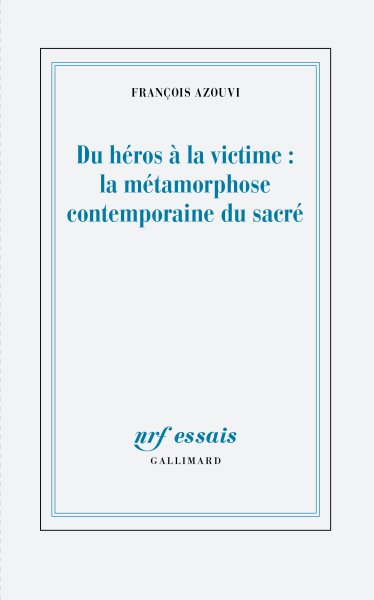
Since the two World Wars, the victim has been raised to the status of a sacred and predominant figure in historical memory. The victim has become the new figure of the hero, thus setting a new and controversial example.
Why do we believe that our societies are freer, more prosperous or more democratic thanks to the institution of private property rather than in spite of it?
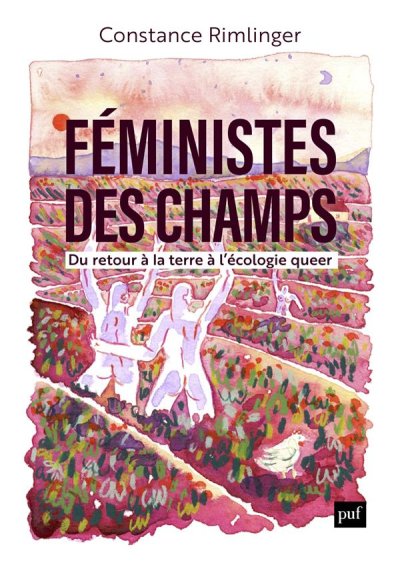
By shedding light on alternative ways of life that have hitherto been kept in the shadows, Constance Rimlinger shows that ecofeminist utopias are a reality that seeks emancipation from capitalism and patriarchy.
Based on a collective survey, Christine Détrez intends to deconstruct the term ‘crush’ and explores the social meanings underlying the many ways young people aged between 12 and 25 form relationships and learn about love.
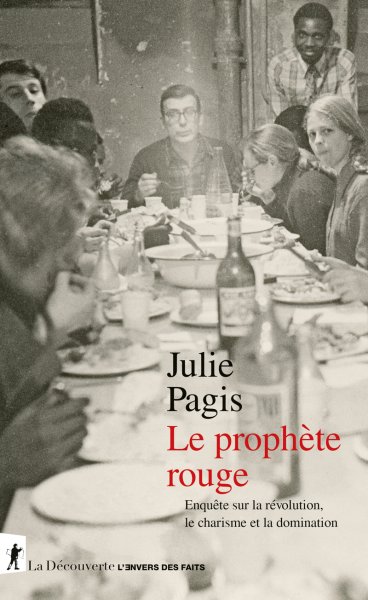
In post-May Paris, a mysterious Maoist activist, Fernando, brings about a dozen of people to form a revolutionary group. Studying this charismatic-led organization allows Julie Pagis to deepen our understanding of Weberian domination through sociological enlightenments.
“Who extends the life of objects, nowadays?” Julie Madon’s sociological study on “longeviters” shows the diversity of their profiles and motivations, as well as the specific practices of sustainability and the controversies they give rise to.
Condensing the history of migration into the space of five buildings in the industrial suburb of Saint-Denis, Fabrice Langrognet gives voice to unexpected archives. These tell us much about the coexistence of multiple and diverse foreigners united by precarity and uncertainty.
As multilateral cooperation is increasingly under attack, Katerina Linos challenges certain misperceptions about the role of international institutions, particularly the European Union, and emphasizes their capacity for action in times of multiple crises.
The “ardor of pillagers” refers to the momentum driving the depletion of life, which is outlined by Hicham-Stéphane Afeissa in his new book, drawing on the entire field of ecological thought.
Ecological politics have struggled to ward off environmental disaster. To impose itself as a transformative force, Jean-Baptiste Comby shows that ecological politics must become the strategic tool and compass of a genuine class struggle.
Though they are presented as egalitarian, public health policies make extensive use of patient selection. As Maud Gelly demonstrates in an illuminating new book, this practice contributes significantly to health-related social inequality.
Under the old regime, abortion did not exist as a distinct legal category. Yet it was practiced and criminalized when associated with sexual transgressions. How does one write the history of an unimagined concept and a hidden practice?
At a time of increasing appeals for moderation and lifestyles more respectful of nature, a new book proposes an original approach: to use the concept of asceticism to grasp practices of voluntary renunciation as a kind of spiritual experience.
How is sociology produced today? Drawing on their intersecting career paths, three sociologists reflect on their working conditions and how these affect their scientific output.
What social meaning can be given to the romantic relationships of adolescents? A comparative study examines perceptions of love and conjugality among young people from different backgrounds, paying particular attention to the question of gender in adolescence.
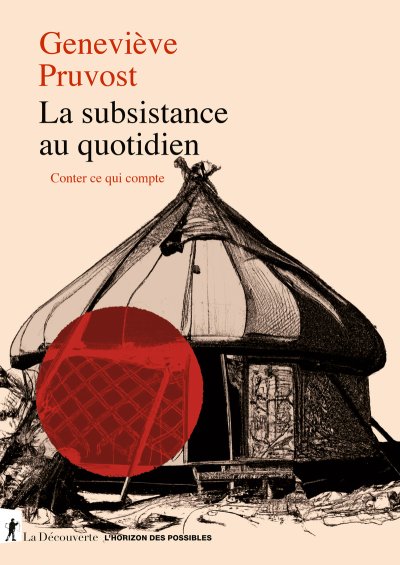
Drawing on the resources of ethno-accounting, Geneviève Pruvost conducts a fascinating investigation into “alternative” lifestyles in rural areas.
The separation of church and state is a principle that is often difficult to apply. In some cases, a delicate balance must be struck between religious freedom and equality.
Criticized for its repeated failures, the French police seem to desperately lack an explicit approach for dealing with demonstrations. They could take inspiration from the principle of de-escalation promoted throughout Europe.
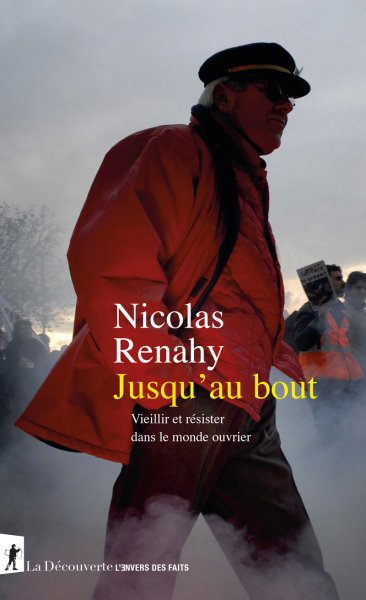
A five-year investigation reveals how the most militant blue-collar workers in Sochaux are growing older but continuing to stand up for their beliefs even after their retirement.
Are we responsible for our own health? Yes, according to advocates of liberal public policy. Yet this position fails to acknowledge social inequality’s serious pathogenic effects.
While we have entered the age of generative AI, it is worth having a look at how computers can help literature scholars and intellectual historians to explain the life of concepts, aesthetics and genres.
By following inmates who were not initially religious but who later found God in prison, Thibault Ducloux rethinks our understanding of the social conditions that produce and preserve faith.