


Laurent Coumel has written a wonderful essay on the social history of the late Soviet Union. He shows how Soviet society was subject to the same dynamics as western European society: the rise of individualism, leisure, and the desire for comfort.
In the time of disaster
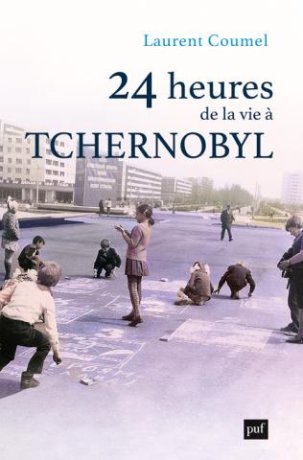
About: Laurent Coumel, 24 heures de la vie à Tchernobyl, Puf
About: Laurent Coumel, 24 heures de la vie à Tchernobyl, Puf

|
In March 1985, Soviet television broadcast the adventures of a young Soviet woman from the future, Alissa Selezniova, as she battled with space pirates—contemporary avatars of the saboteurs who, in the 1920s and 30s, infiltrated the Soviet Union to undermine Bolshevism. The series was based on Kir Bulychev’s very popular science fiction novels. It presents a society in which communism has finally triumphed. In the future, children have remarkable athletic skills, speak dozens of languages, and have advanced intellectual abilities. The USSR controls interstellar travel and airborne shuttles are the main form of public transportation. The future is indeed radiant. On the night of April 25-26, 1986, reactor 4 at the Chernobyl nuclear power plant exploded. The accident cast doubt over the Soviet Union’s claim to be an advanced technological society and undermined citizens’ confidence in scientific progress and the future.
Laurent Coumel, an associate professor at INALCO, [1] opens his book with this event—the Chernobyl disaster—and a vantage point—Pripyat, the town next to the power station—to “explain the social history of this country-continent from the 1970s to the 90s.” Pripyat is an atomograd (an atomic town), which gives it a distinct territorial status and subjects its population to a special regime. Construction of the town began in 1970. It was designed to accommodate the power station’s employees and their families. In 1986, it consisted of 45,000 relatively young inhabitants. Their average age was 26. The birth rate was high. Drawing on recent historiography in multiple languages, Coumel uses this microcosm, in his lively synthetic work, to explore aspects of Soviet civilization in the 1980s. He relies primarily on secondary sources: published document collections (particularly KGB dossiers on the accident), statistics, and several testimonials. When sources on Pripyat are not available, he fills in the blanks by drawing on contemporary examples. The book abounds in biographical accounts, discussions of late Soviet literature, and references to movies, TV series, and cartoons. French historiography, which was long been dominated by the study of Stalinism, mass violence, repression, and imperial dynamics, has only recently interested itself in Soviet daily life, particularly the 1960s and 70s. [2] Coumel’s book broadens this perspective to the 1980s and to a Soviet Union that did not yet think of itself as on the verge of collapse by presenting the institutions, representations, and social dynamics that formed the texture of Soviet life. It is a perfect complement to the excellent exhibit catalog published by the Musée des Beaux-Arts of La Chaux-de-Fonds, L’Utopie au quotidien: la vie ordinaire en URSS (Everyday Utopia: Ordinary Life in the USSR), [3] which, with high-quality photographs and literary quotes, documents the phases of Soviet life, presenting rituals and institutions that now seem highly exotic. It is in this civilization, now so foreign to us, that Coumel immerses us over eight chapters.
Living the good life in Pripyat
When the planned test at the Chernobyl power station went awry on April 26, 1986, resulting in an explosion, a shimmering column with blue highlights rose in the sky. The book begins by evoking nighttime and its meaning for the Soviet people. At the very moment the disaster occurred, some of the scientific and technological intelligentsia in charge of the power station were, according to Coumel, probably engaged in a pastime that was widespread in the Soviet Union: reading. Nights were often devoted to reading: classics, scientific and technical brochures, science fiction, and the gray literature of dissent. “All Soviet society read, with the elites reading even more.” The evening could also be devoted to other pastimes, such as listening to music or foreign programs. Pripyat played a role in spreading these other cultural practices. The Jupiter Factory, which made equipment for the arms industry, also produced tape recorders. Audio cassettes made possible the diffusion of Soviet popular music, music by singer-songwriters, and emerging genres, such as rock. People listened to foreign broadcasts on short-wave radio. The technical intelligentsia, which ran the nuclear power stations and the jewels of Soviet industry, participated in the rise of these milieus, whose lifestyles and interests diverged from the official Soviet project.
For factory workers and office employees, the 1970s and 80s were a time of growing comfort. Within a few years, Pripyat, like many Soviet towns, expanded and filled itself with modern buildings. 160 housing developments were built for workers who came to work in local factories and the power station. In the mid-1990s, peripheral neighborhoods became symptomatic of what Vladimir Glazytchev called faubourgeoisement (roughly, “urban sprawl”). The modern housing units, which were distributed by municipal authorities, companies, or government ministries, had separate bathrooms and individual bedrooms. Heating and electricity costs were minimal. Soviet people bought furniture, decorated it to their taste, and personalized it with trinkets. These practices also revealed social differences: wealthier Soviets bought high quality furniture from Yugoslavia and Latvia, showed off goods bought in beriozki (stores selling consumer items purchased from abroad with hard currency) and rare technology (such as TV sets and stereos). Coumel emphasizes the multiplicity of supply circuits: in addition to official circuits, there were interpersonal networks and the black market, through which one could make up for the planned economy’s shortcomings.
Hierarchies and inequalities
The need for food supplies forced the Soviets to adopt various adaptive strategies to grapple with shortages. Food distribution across the entire territory was not equal: major cities, capitals of the federal republics, and cities that were closed for strategic reasons were better supplied. In addition to these hierarchies there were institutional ones. Cadres in government ministries, the Party, and strategic industries had access to elite cafeterias, which enjoyed products available through special stories and received wine, liquor, and spirits as gifts. For ordinary Soviets, dachas (small country houses lacking running water) allowed city-dwellers to escape to the country during the summer months and grow supplies for the winter (potatoes, cabbages, tomatoes, and fruit), which they preserved through marinades, jams, and fermentation. Furthermore, they bought ground meat, sausage, and industrial noodles in stories, which often required waiting in long lines. Berry and mushroom-picking and fishing could also supplement store-bought goods, in addition to being a source of vitamins and protein and a soothing pastime. To enhance comfort and meet the needs of the country’s incipient consumers, the Soviet food-processing industry began producing candy, chocolate, and soft drinks, and, for the 1980 Moscow Olympic Games, even signed an agreement with Pepsi to make soda on Soviet territory.
After food and supplies, Coumel turns to private life in Soviet times. In contrast to the sexual avant-garde promised by Alexandra Kollontai, Soviet society in the 1980s was deeply conformist. Social stability also contributed to bolstering gender inequality. Despite the state-sponsored feminism and Soviet women’s genuine achievements (notably economic autonomy), women were generally responsible for domestic labor. They took care of children, old people, and people with disabilities, in addition to taking care of groceries. In the mid-1980s, the ritual of marriage marked, in the secularized settings of “marriage palaces,” the entry into adult life and guaranteed moral standards. Though abortion was legal, contraceptive devices were not widespread, sexuality remained taboo, and homosexuality was met with public disdain.
The book’s four final chapters are organized around Soviet daily life: studying, work, “free time,” and vacations. Coumel emphasizes other forms of social inequality. The Soviet school system remained compartmentalized and unequal. The rural youth mainly pursued professional and technical education. Three out of five young Soviets studied in more reputable institutions, particularly those for training middle managers. Pripyat’s brightest young people went to state universities or the Kiev Polytechnic Institute. School was not the only youth organization. Between the ages of 14 and 28, most young people were komsomols. This experience provided them with a deep ideological education, often inculcating the idea of sacrifice and the cult of the “Great Patriotic War,” which has recently been revived by Vladimir Putin. As for factor work, Coumel shows that, in contrast to the passivity and dysfunction often associated with Soviet companies, the regime sought, since the 1950s, to increase productivity. In addition to reforms of the command system, there were regular campaigns against labor indiscipline and theft. In 1982, the KGB even created a unit charged with fighting economic crime and corruption.
Rather than examining striking events and dwelling on major decisions (or the lack thereof), Coumel is interested in everything surrounding the disaster. In the end, the book says little about Chernobyl itself. The reactor’s explosion functions rather as a window into Soviet life in the 1980s. In this way, the book is a wonderful essay about the social history of the late Soviet Union. It shows us how Soviet society faced the same broad dynamics as western European society: the rise of individualism, leisure, and the desire for comfort and privacy. The book makes it possible to understand the dynamics of nostalgia—so pervasive in contemporary Russian society—for a time when the USSR was a recognized power, had a stable future, was endowed with a reassuring official structure, and in which faith in Marxism-Leninism and regime propaganda persisted. For many Soviet citizens, it was possible to accept authoritarian discourse and practices, as the regime tolerated strategies for adapting to its shortcomings and afforded citizens an (admittedly limited) degree of autonomy.
Laurent Coumel, 24 heures de la vie à Tchernobyl (24 hours in the life of Chernobyl), Paris, Puf, 2024, 200 p., 16 €.
by , 23 September 2025
Share this article
Find us here :


To quote this article :
Sylvain Dufraisse, « In the time of disaster », Books and Ideas , 23 September 2025. ISSN : 2105-3030. URL : https://laviedesidees.fr/In-the-time-of-disaster
Nota Bene:
If you want to discuss this essay further, you can send a proposal to the editorial team (redaction at laviedesidees.fr). We will get back to you as soon as possible.
You might also like


Footnotes
[1] National Institute for Oriental Languages and Civilizations (Institut national des langues et civilisations orientales) (Translator’s note).
[2] Key studies include the innovative work of Larissa Zakharova: “Le quotidien du communisme : pratiques et objets,” Annales. Histoire, Sciences Sociales, 68/2, 2013, p. 305-314; S’habiller à la soviétique, Paris, CNRS Éditions, 2011; De Moscou aux terres les plus lointaines. Communications, politique et société en URSS, Paris, EHESS, collection “En temps et lieux,” 2020; Marc Élie and Isabelle Ohayon, eds. “L’Expérience soviétique à son apogée. Culture et société sous Brejnev,” Cahiers du monde russe, 54/3-4, 2013.
[3] Lada Umstätter, Geneviève Piron, L’Utopie au quotidien: la vie ordinaire en URSS, Lausanne, Éditions Noir sur Blanc, 2017.
Our partners


Sections
Keep in touch
© laviedesidees.fr - Any replication forbidden without the explicit consent of the editors. - Mentions légales - webdesign : Abel Poucet