


Ancient Roman diets were based on health concerns as well as moral and political considerations. Frugality and pleasure were not mutually exclusive. Eating was about more than filling one’s stomach.
Pompéi, La Villa des Mystères
Roman menus
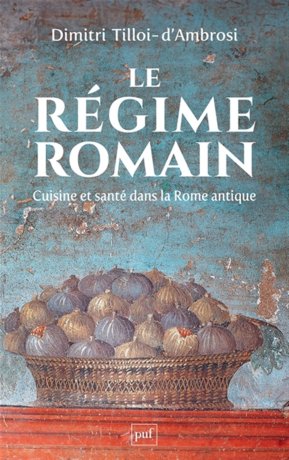
About: Dimitri Tilloi d’Ambrosi, Le Régime romain, Presses universitaires de France
About: Dimitri Tilloi d’Ambrosi, Le Régime romain, Presses universitaires de France

|
Nunc est bibendum (“Now is the time to drink”). So said Horace – as did a Michelin tire commercial from the early twentieth century. The former was making an appeal to honor Cleopatra after her death. The latter was capitalizing on the modern view of Roman society as characterized by license and excess, particularly when it came to eating, drinking, and pleasure.

A modern representation of the “decadent” roman banquet: Thomas Couture, Les Romains de la décadence, 1848, Musée d’Orsay
A total historical object
Dimitri Tilloi d’Ambrosi examines the flipside of this perception in a book devoted less to ancient Roman food – a topic that has been abundantly studied – than the dietary discipline that Romans imposed on themselves. This “diet” or “regime” must be understood in the political (and etymological) sense of the Latin word regimen: that is, as a question pertaining to the individual and collective “government” of eating and stomachs.
While at first glance diets relate to dietetics and thus to ancient medicine, they also pertain to morality, philosophy, and, occasionally, politics. Tilloi d’Ambrosi is thus examining a total historical object, at the intersection of medical, cultural, economic, social, and political history. He does so by considering the period between the Second Punic War (202 BCE), when medicine and gastronomy arrived from Greece in Rome, which was becoming a Mediterranean power, to the 6th century CE, when the last truly Roman sources disappear.
The sources on which he relies are primarily literary, but these encompass many different genres, from the medical writings of Galien of Pergamum to the gastronomical treatises of the famous ancient gourmet Apicius, by way of the philosophy of Seneca, the moral reflections of Plutarch, and other, unclassifiable writings, such as Aulus Gellius and Athenaeus of Naucratis. The “menu” he provides the reader is thus far more nuanced than the clichés to which Roman movies have accustomed us.
A medical and technical question
Roman dietetics was, in the first place, a matter of health. It partook in the conceptual framework of the Hippocratic theory of the “humors,” which governed ancient medicine. Health and sickness were signs of an equilibrium or a disequilibrium between the four humors that circulated in the body. Because food acted on the production of humors, regulating it made it possible to correct an imbalance and regain a healthy balance. Doctors thus recommended specific foods, the quantity and frequency with which they were to be eaten, and even how they should be prepared or cooked – all depending on the patient’s needs and the properties of foods and their “coctions” – that is, their chemical interactions between food and the eater’s stomach.
To old people, whose bodies were “cooling,” doctors recommended wheat and roast meat, which were reputed to have “warming” qualities. Conversely, barley, which was considered “humidifying,” was best eaten in the summer and by young people. Because health also depends on digestion, doctors made recommendations to cooks.
Food was ground up to free its essences and heighten its coction effects. Romans avoided eating raw food as much as possible and thus preferred boiled food, which was considered more fully cooked than roasted food. It was considered less dehydrating – for the food as well as the eater. Romans were also wary of the excesses of gastronomical refinement, which denatured products and encouraged excessive gluttony.
A moral and philosophical question
Food and its proper “governance” also raised moral questions for the Romans. Their philosophers took clear positions on the topic. Stoicism, the dominant school embodied notably by Seneca (4 BCE-65 CE) emphasized the Roman ideal of frugalitas, or moderation and simplicity. Cato the Younger (95-46 CE), who was the embodiment of Roman tradition – the famous mos maiorum – and sworn enemy of Julius Caesar, recognized the future dictator’s remarkable frugality. Conversely, the great statesman and general Lucullus (118-56 CE) was widely condemned for his fondness for luxury and refined food.
The food question overlapped with Roman suspicion of luxury, which, like cooks and their recipes, arrived from the Greek Orient, which was deemed decadent and corrupting. Sumptuary laws adopted during the Second Punic War to combat these trends also regulated the quantity of food served during banquets. The goal had less to do with health than with politics: excessive food could lead to other, more dangerous excesses, and divert the money and effort of the powerful from public affairs.
Even the Epicureans, whom we typically associate with the pleasure of dining, condemned excessive eating, which they believed led to poor health and moral as well as physical softness. The cook – cocus, in Latin – was thus the enemy of the philosopher, due to his status as a slave. He served his master, was seen as necessarily deceptive and inclined to steal, and thus incapable of the moderation essential to the free Roman.
Politics and identity
Eating was already a way of affirming one’s identity, as the famous gourmet Brillat-Savarin observed in the nineteenth century. Dietary advice varied depending on a patient’s age, lifestyle, and health, as well as the season and region of the Empire in which one was located, since Roman domination had not standardized eating habits.
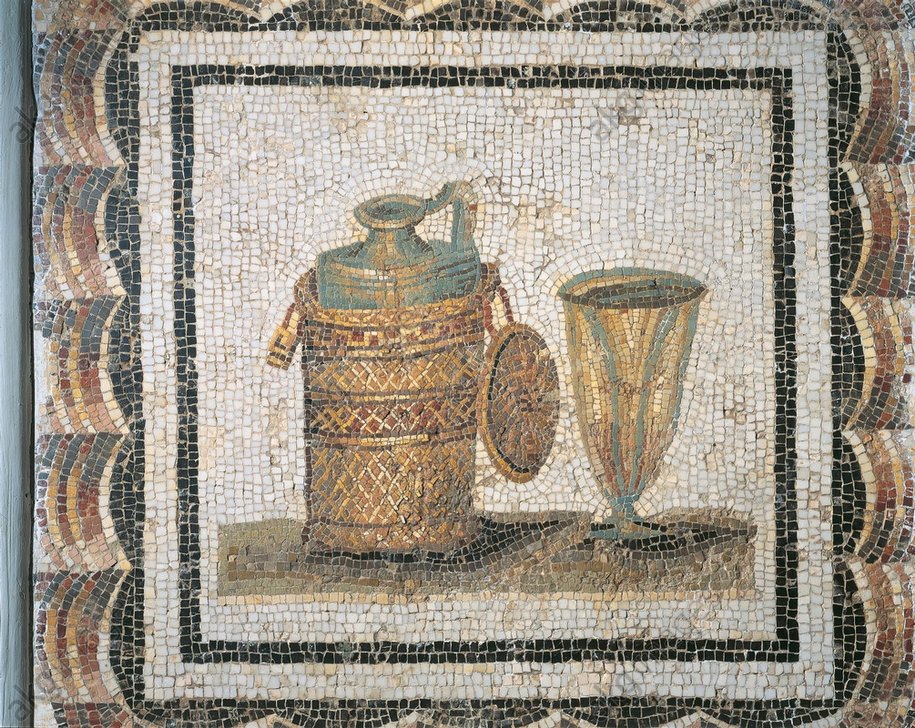
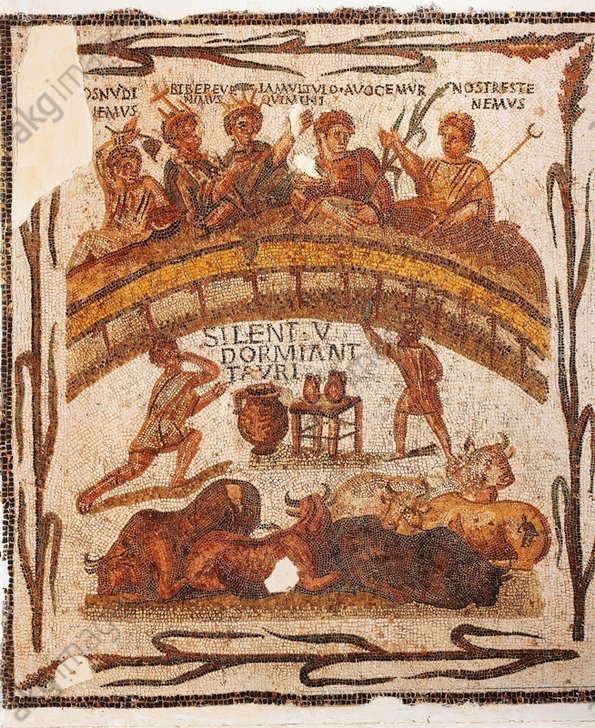
But food and the care given to it also allowed elites to distinguish themselves and assert their social superiority. The Roman banquet, a moment of elite sociability par excellence, was an occasion for displaying one’s wealth through luxurious foods and tableware, abundant wine, and refined preparations. Nor were banquets spared from dietary considerations. The xenia decorating banquet rooms, as seen in the frescoes and mosaics of Pompei and Herculaneum, represented the food consumed at such events, emphasizing the most dietetic dishes, such as vegetables and fish.
Conscious of the social importance of these moments of excess and the impossibility of ending them, doctors and philosophers sought to attach various prescriptions to them that would limit their nefarious effects. For instance, one could prepare for them by fasting and follow them with “digestive” or purgative foods such as snails, lettuce, or wine. Taking pride in one’s dietetic habits and being concerned with one’s health, even in moments of excess, was part of a culture shared and practiced by elites. This paideia, which blended literature, art, science, and even medicine, also came from Greece.
An additional marker of education, wealth, and refinement was to keep a domestic doctor who was allowed to regulate meals. Roman emperors took dietetic concerns to an extreme level, making them a political issue. A good emperor, as described in the literature produced by Senate elites, was as moderate in his eating habits as in politics. He was easily satisfied and exemplified that simplicity that Augustus had famously put on display by contenting himself with water, fresh fruit, and bread, consumed on the run while carrying out political tasks.
Marcus Aurelius, the philosopher-emperor par excellence, adopted this diet. Septimius Severus, a soldier-emperor whose meals resembled troop rations, in which meat played a central role, reinvented this diet in a way that was also political: the vigor and simplicity of his meals guaranteed that of the imperial body and, by extension, that of the entire Empire in a period when its borders were threatened.
What about pleasure?
Amidst all these rules, was there any place for taking pleasure in a meal? In fact, there was little, if one compares the reality of Roman practices to modern clichés. Purging oneself during or after a banquet was not a usual way to continue eating, but only a medical action taken when one was in danger. Dietetic discourse pervaded many aspects of life, including Apicius’ famous cookbook, which was written in the third or fourth century CE but was attributed to a gourmet from the time of Tiberius.
Despite their refinement and fondness for good food, some of its recipes testify to genuine concern with digesting one’s meal and its purported effects on the body, consistent with contemporary medical theories. The food prepared by a good cook was not just enjoyable but also easy to digest and healthy. Dietetics and culinary pleasure were not seen as mutually exclusive. Even doctors believed that healthy food should be pleasing to the mouth and that concern for one’s taste buds kept the stomach healthy.
Roman elites’ attentiveness to their palate is evidenced in the way they made use of eight distinct tastes to describe food, compared to the four that we now use (sweet, savory, sour, and bitter). Sauces, spices, and other methods for improving a meal’s taste found favor with culinary rule-makers providing they remained within the framework of the humoral system and aligned themselves with patients’ needs.
In these ways, Tilloi d’Ambrosi plunges us into Roman ideas about food – or, in any case, the ideas of Roman elites, for whom the concern was less about quantity than quality. Regrettably, the book does not address food-related rules made by religious figures. They were not, of course, as prescriptive as the rules of Abrahamic religions, but they were by no means lacking in the realm of food-related symbolism.
Even so, Tilloi d’Ambrosi’s book has the great merit of showing the great complexity of Roman conceptions of food. Several differences with our current preoccupations are immediately apparent, notably the absence of ecological considerations – and for good reason. But the similarities are equally striking, even though we have abandoned the humoral framework. For the Romans, eating was already a serious question: one related to pleasure, but also to health and identity, and even to civilization itself.
Dimitri Tilloi d’Ambrosi, Le Régime romain (The Roman Diet), Paris, Presses universitaires de France, 2024, 288 p., €22, ISBN 9782130850311.
by , 24 March
Share this article
Find us here :


To quote this article :
Kevin Bouillot, « Roman menus », Books and Ideas , 24 March 2026. ISSN : 2105-3030. URL : https://laviedesidees.fr/Roman-menus
Nota Bene:
If you want to discuss this essay further, you can send a proposal to the editorial team (redaction at laviedesidees.fr). We will get back to you as soon as possible.
You might also like


Our partners


Sections
Keep in touch
© laviedesidees.fr - Any replication forbidden without the explicit consent of the editors. - Mentions légales - webdesign : Abel Poucet