


In a study initiated by Fondation Abbé Pierre, sociologist Denis Merklen explores activism in working-class neighborhoods. The book illuminates both the social logics at work and the forms of activist creativity, but tends to overemphasize the role of institutional actors.
Fondation Abbé Pierre
Residents and activists
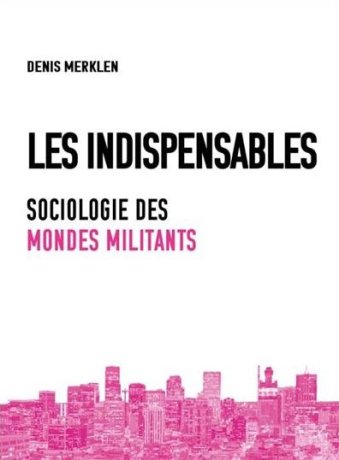
About: Denis Merklen, Les indispensables. Sociologie des mondes militants, Éditions du Croquant
About: Denis Merklen, Les indispensables. Sociologie des mondes militants, Éditions du Croquant

|
Sociologist Denis Merklen, well known for his work in Argentina and France, proposes an original study that serves as a fine tribute to activists operating in working-class neighborhoods. Les indispensables. Sociologie des mondes militants (The Indispensable Ones: A Sociology of Activist Worlds), based on research funded by the Fondation Abbé Pierre (FAP) and conducted in 2016-2018 and 2020-2022 (in the context of the COVID-19 pandemic), is neither a general overview of “working-class neighborhoods” in France, nor a monograph on a specific one. The book examines activist commitments in seven cities (Aubervilliers, Roubaix, Avignon, Lille, Montpellier, Strasbourg, and Toulouse), focusing on several key themes: social action, urban renewal, theatrical initiation, hygiene in times of pandemic, sports and music in housing estates, etc. It also presents lengthy interviews conducted with sociological figures (some of them well-known) regarding their careers, activities, and thoughts. Each of these interviews is complemented by peripheral documentation and by interviews with people close to the activist associations studied. The chapters are framed by a more theoretical and methodological introduction and by a sort of epilogue on the national meetings of associations organized by the FAP over the past ten years.
I will not attempt to summarize this exceptionally rich work, leaving it instead to readers to discover its secrets and analyses. Nor will I quarrel with the selection of sociological studies or point out the occasional omissions (or shall I say, the “effects of ignorance”?). However, I will offer a brief historical reminder (for younger readers) and then discuss the notion of “activists,” which seemed increasingly problematic to me as I read through the book.
“The Uprising of Kindness”
In 1952, in the midst of a particularly harsh winter, a young French Catholic priest named Abbé Pierre launched a call to action on behalf of destitute families and individuals facing a housing crisis exacerbated by exorbitant prices (the situation was particularly dire in Paris). The event took place during the radio game show Quitte ou double. After receiving a prize of 260,000 old francs (about €3,800) for answering questions on current affairs, the young priest said on air: “The question I’d like to ask each of you is this: How much are you going to send me to build homes for the homeless?” [1]
Abbé Pierre was by no means an unknown figure, and even less so a political novice. In 1945, this former member of the Resistance was elected deputy for Meurthe-et-Moselle as an independent close to the Popular Republican Movement (MRP, a Christian-democratic political party that existed from 1944 to 1967). Always the rebel, Abbé Pierre denounced repression in the colonies in 1949, alongside Breton, Sartre, and de Beauvoir, before breaking with the MRP in 1950 and ending his political career without a mandate in 1951. By that time, however, he was already rubbing shoulders with the homeless—the “underprivileged,” among them former ragpickers—in the run-down house he was renovating in Neuilly-Plaisance. Thus was born the legend of the Emmaus movement: communities of men and women salvaging and sorting metals, tins, rags, paper, and later, antiques from cellars and attics. The fact is that in the years following World War II, homelessness increased due to the war-induced destruction, the outdated and decrepit housing stock, and the state’s reluctance to assume the role of housing developer. Makeshift houses sprang up everywhere, and this did not come without risks.
Donations poured in following the 1952 appeal. However, it was only in the winter of 1953-1954, when temperatures oscillated between minus 10 C and minus 20 C every night, that Abbé Pierre decided to take a further step by sending an open letter to the Minister of Reconstruction. “Monsieur le Ministre,” he wrote, “a little baby from the Cité des Coquelicots froze to death on the night of January 3rd to 4th, just as you were giving a speech in which you rejected emergency housing. He will be buried at 2pm on Thursday January 7th. Think of him. It would be good if you came...” Not only did the Minister attend the burial, but he followed the coffin alongside the ragpickers!
This little historical reminder takes on its full significance not only in the light of the actions carried out since 1952 by the FAP (and Emmaüs in particular) on behalf of the “Fourth World,” but also in the light of the situation we are living in today; not only because the FAP has always operated independently from the state, but also because it has played a unique and decisive role, especially during the pandemic. In many respects, the current situation is completely different from that of the post-war period. And yet, similar if not identical causes (amplified today by the Macron government’s drastic cuts in aid to associations) produce comparable effects (homelessness, the feeling of abandonment, the stifling of local actors’ desire to address “the misery of the world”) and lead to the same diagnoses. Thus, from philanthropy to uprisings, history repeats itself as metamorphosis, following the dialectic of change and continuity pointed out by both Marx and Robert Castel.
Questioning Activists’ Scope of Action
Now, why does “activists” strike me as a problematic notion, even as a “floating signifier”? For a number of reasons that warrant, if not a critical reading, at least some discussion.
The aim of Les indispensables is neither to evoke the political activists of this or that party—or even “simple activists” [2]—nor to deny their existence. Working-class neighborhoods are not a “political wasteland,” despite what some (politicians, journalists, sociologists) have been claiming for the past forty years. [3] To put it simply, the forms of activism examined in the book are distributed along two axes: The first axis runs from a social pole (social professionals, educators, but also mothers) to an artistic or cultural one (stage directors, actors, sports trainers, musicians), the second from a pragmatic pole (the handling of social problems) to a critical one (the conditions of intervention in public space). Far from being ignored, the multiple conflicts, cleavages, dilemmas, and ambivalences encountered in the field are placed around these two axes.
What do professionals, association activists, grassroots activists, new activists, and ordinary residents have in common? Are they all “activists” by virtue of their civic commitment? And what does this commitment entail? Activists are no doubt “indispensable” in counteracting the effects of the disaffiliation (a concept dear to Castel) of working-class families, immigrants, and descendants of immigrants. As is well known, these populations not only live in precarity and isolation, but are also subject to urban segregation and ghettoization, to racism and discrimination, and to the contempt of elected officials. In addition, they must cope with the—sometimes staggering—failure of institutions and the lack of facilities for working-class youth. Put simply and in more general terms, they live under conditions of oppression. All of this is rightly recalled in the book.
That said, Merklen’s situational narratives tend to substantialize the notion of “activists,” as if doing things for and above all with—rather than in place of or in the name of—local residents were also a form of “activism.” They thus tend to obscure both the multiplicity of positions and postures and the diversity of relationships to the state and to its resources, to neighborhoods and to their residents—all of which are well documented by Merklen. To be sure, the “activists” described at the beginning of the book are “multi-positioned,” as the saying goes, but their repertoire of action is mainly that of social intervention. This is not just a theoretical debate! If the term “activists” raises questions, it is because the legitimacy of these actors is a source of conflict and is sometimes challenged by the main stakeholders in working-class neighborhoods and elsewhere. Thus, however well intentioned, activists are regularly accused of depoliticizing the problems encountered, of turning the provision of public services into a management or social engineering tool.
In fact, the activists foregrounded in the book have one thing in common: Their associations were all created in the wake of the urban policies implemented by the state in the early 1980s to tackle the “crisis of the banlieues,” which was seen as stemming primarily from a lack of social—rather than democratic—cohesion. The consequence of this is that membership in an association has become “indispensable” to access the resources provided by the different state institutions. There is no other way activists can get subsidized jobs, operational funding, or even a simple office space. Conversely, state institutions now have a right of inspection and even control over the activities of “association activists”—just as they exert increasing influence on social work, transforming and sometimes distorting its missions. It is easy to see why activists feel uncomfortable asking for state support: On the one side, the quest for resources is a marathon marked by difficulties and fierce competition; on the other, dependence on the public (and private) sector comes with many problems.
One might raise the following objection: Just as some neighborhood activists escape this logic of dependency and defend their autonomy at all costs, many activist groups—for instance, those fighting police and racist violence or those involved in food redistribution (People’s Solidarity Brigades, canteens, various collectives)—refuse to form associations; the principle of autonomy is similarly upheld by several informal collectives concerned with forms of life (urban neighborhoods, squats, communities, rural collectives, etc.). Whether they have educational and cultural capital or not, and whether they work for local authorities or live off welfare, these various activists try to keep their distance from the state in all its forms.
To take one example, activists working in the area of food security (an issue that has returned to the forefront since the COVID-19 lockdown) want nothing to do with the social and solidarity economy sector, whose tendency to take advantage of people’s goodwill strikes them as profoundly objectionable. They would much rather collaborate with those who go to the Rungis food market at 5am to collect unsold goods and redistribute them free of charge to the most needy. The problem is that for reasons of methodology, this particular stratum of “activists” receives very little attention in the book. This would be less of a problem if social fragmentation were matched by the fragmentation of struggles—provided the latter is understood in its positive sense, rather than as synonymous with dispersion.
And yet, aren’t all activists “indispensable”? Are those who take a more radical approach less worthy of consideration? And what about neighborhood activists who turn away from classic forms of organization because they find them exhausting and ineffective? As Merklen himself points out at the end of the book, it does not suffice to promote heterogeneity as an inherent good, nor is it enough to suggest the existence of a common experience beyond the cleavages that cut across and challenge “activist worlds”: One must accept and deal with conflict in its political dimension. What the term “activists” tends to flatten out are the different strata of those worlds. The associations, informal groups, and networks that constitute the many elements of a constellation—as can be seen in Montpellier and Toulouse—clearly demonstrate this. While conflicts can be either internal and external to activist formations, it is internal conflicts that paralyze action, whenever tribalism and the battle of egos prevail over common goals.
However, and this is a major contribution of the book, alternatives do exist, even when there is no one left in the neighborhood, when all institutions are closed—for holidays or for lockdown—and when the residents are alone and abandoned. In this respect, the FAP serves as an intermediate space between the state and local associations. But is that all there is to it? Are there no other intermediate spaces? It is surprising how little attention is given to religious associations, and in particular to Islam—one should probably say “Islamic currents” to avoid obscuring the religion’s plurality. It is as if religion in general were not an important dimension of the social organization of working-class neighborhoods—one that, whether we like it or not, has come to fill the social void. [4]
One wonders whether the “real subject” of interest for Merklen is not in fact the transformation of the social. Considered as a domain in its own right, the social is being crushed, on the one hand, by clientelist policies aimed at ensuring social peace and, on the other, by the individualistic strategies of different actors. The book illuminates the way the “social” functions (or not) in working-class neighborhoods, whose landscape has been transformed by urban renewal and conservative surgery programs (access to property, rental programs for more affluent households, etc.). It also sheds light on the mechanisms and skills that have been mobilized to save a whole section of the population from catastrophe (particularly during and after the COVID-19 pandemic) in the absence of a social component in French urban policy. The primacy of the social is what seems to lead the author to point out the paradoxes and ambivalences of local action, even as he perfectly describes cultural activism (in Avignon, and especially in Toulouse) and artistic creation around Hip Hop (which partly escapes the actors concerned as it is subject to market forces). In both cases, however, it is by building on a legacy of experiences and struggles that working-class neighborhoods have been able to stand firm and to avoid the worst: poverty, abandonment, insecurity, and death.
Ultimately, many of the perspectives highlighted in this study (and others like it) seem like attempts to square the circle: Activists want more of the (retreating) welfare state because they depend on it and less of it because they wish to escape its grip; they aspire to autonomy, but at the risk of losing access to scarce resources; they hope to see less conflict linked to drug trafficking (and to the social demand for drugs), but will not challenge the ineffective and obsolete prohibitionist regime; they would like neighborhood actors to have greater public visibility, but worry that this will cause their voices to be dispersed and, above all, silenced by the mainstream media (as occurred during the riots of 2023); they favor local implantation, but not without global strategies and actions. Since the late 1970s, several experiments and autonomous initiatives have attempted to break out of this vicious circle so as to acquire a national dimension and tear down the veil of social hypocrisy. While many of these experiments and initiatives have failed, it is (paradoxically) unfortunate that the book pays so little attention to them. And that is where we are now. The history of neighborhoods does not repeat itself: It stagnates.
Be that as it may, Les indispensables will be of interest to anyone concerned about life in neighborhoods that have been neglected by the state, stigmatized, and criminalized. Merklen paints a vivid and contrasting picture of this reality. Far from all the media hype, the book seeks to initiate a genuine debate by giving voice to the neighborhoods’ main stakeholders: the residents.
Denis Merklen, Les indispensables. Sociologie des mondes militants, Paris, Éditions du Croquant, 2023, 300 p.
by , 4 September 2025
Share this article
Find us here :


To quote this article :
Michel Kokoreff, « Residents and activists », Books and Ideas , 4 September 2025. ISSN : 2105-3030. URL : https://laviedesidees.fr/Residents-and-activists
Nota Bene:
If you want to discuss this essay further, you can send a proposal to the editorial team (redaction at laviedesidees.fr). We will get back to you as soon as possible.
You might also like


Footnotes
[1] All the information and quotations that follow are taken from the major work of Christian Bachmann and Nicole Le Guennec, Violences urbaines. Ascension et chute des classes moyennes à travers cinquante ans de politique de la ville, Paris, Albin Michel, 1996, Chapter 10, “L’hiver 1954,” pp. 90-104. Obviously, the book’s title is to be understood in a completely different sense than the security and police-oriented one that has since imposed itself.
[2] Raphaël Challier, Simples militants. Comment les partis démobilisent les classes populaires, Paris, PUF, 2020.
[3] See, in particular, Ahmed Boubeker and Abdellali Hajjat (eds), Histoire politique des immigrations (post)coloniales. France, 1920-2008, Paris, Editions Amsterdam, 2009; and, more recently, Éric Marlière, Les quartiers (im)populaires ne sont pas des déserts politiques. Incivilités ou politisation des colères par le bas?, Le Bord de l’eau éditions, 2023.
[4] This is one of the arguments defended by Didier Lapeyronnie in Ghettos urbains, Paris, Robert Laffont, 2008. I take up this argument in my book, Refaire la cité, Paris, La République des idées/Seuil, 2013.
Our partners


Sections
Keep in touch
© laviedesidees.fr - Any replication forbidden without the explicit consent of the editors. - Mentions légales - webdesign : Abel Poucet