


Are we responsible for our own health? Yes, according to advocates of liberal public policy. Yet this position fails to acknowledge social inequality’s serious pathogenic effects.
Jules Léonard, Le médecin des pauvres
Does one choose to be sick?
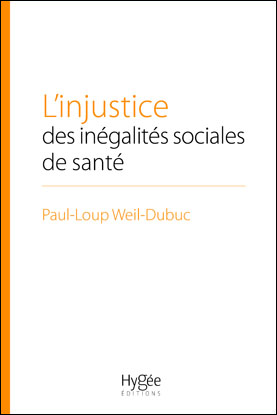
About: Paul-Loup Weil-Dubuc, L’injustice des inégalités sociales de santé, Hygée Éditions
About: Paul-Loup Weil-Dubuc, L’injustice des inégalités sociales de santé, Hygée Éditions

|
The problem of health-related social inequality is hardly new. However, the study of this form of inequality now drives an entire multidisciplinary field that, drawing on demography and epidemiology by way of sociology, seeks to link health and social status. Understanding the psychosocial and existential roots of this type of inequality, and particularly the reasons why they result in relatively little political action, is rarely pursued but is a necessary philosophical, epistemological, and political task. This is Paul-Loup Weil-Dubuc’s goal in his well-argued and richly documented book. He seeks to reinvigorate the political potential of contemporary debates, questioning the effectiveness and fairness of Western democracies’ social model.
Tolerating health-related social inequality is tantamount to minimizing collective responsibility, while also justifying social inequality, typically through arguments that emphasize personal responsibility (since it is assumed that citizens must tend to their own health and wellness) and attribute poor health to misfortune that is either extrinsic (such as a pandemic or war) or intrinsic (genetic makeup). What is shocking is that this inequality is social. It is, in other words, neither natural nor contingent. It results from collective choices—the political, economic, and social priorities that, according to Weil-Dubuc, constitute the values expressing our conception of human life and relationships.
Weil-Dubuc shows that these justifications mask the injustice inherent in health-related social inequality, while preventing action that could change the circumstances resulting in their appearance and reproduction. It is necessary to grasp the philosophical anthropology and epistemology that make these discrepancies tolerable, notably through the ideological construct of a homo politicus modeled on liberalism’s rational homo economicus, whose choices—including health-related choices—result from freely determined individual preferences. How we see health-related social inequality reveals nothing less than our understanding of the social contract and the values that shape and, by the same token, realize it. Referring to Judith Skhlar and Axel Honneth, Weil-Dubuc reminds us that “the issue is thus not determining what objectively constitutes misfortune or injustice but defining the legitimate scope of public action” (p. 13)—not simply to understand health-related social inequality, but to invent new forms of social and political relationships that could defuse these mechanisms.
The book develops this thesis while very persuasively exploring a philosophical alternative to contemporary Western society’s liberal model of health promotion. The book is divided into two parts. A pars destruens offers a critical examination of the theoretical foundations of liberal egalitarianism in the realm of health promotion as outlined in the Ottawa Charter (1986), explaining how neoliberal health policies paradoxically led to a renaturalization of health-related social inequality. This section is followed by a pars construens, which examines the values that make possible a system that justifies and reproduces inequality, and the incorporation mechanisms that make such inequality invisible. Individual lives, it demonstrates, “are assigned unequal degrees of importance according to value judgments” (p. 15) that structure our collective perception of the acceptability of health-related social inequality.
The book’s comprehensive approach makes it both rich and original. Its concerns are epistemological as well as political. Indeed, the redefinition of its topic—health-related social inequality—and its assessment of the interpretations that justify it represent a new configuration of the prospects of contemporary politics and democracy and a critical perspective on our understanding of the human right to life.
Why is health-related social inequality unjust?
Health-related social inequality is seen as a “negative externality” of an otherwise successful liberal model. Put differently, health promotion policies shift responsibility for inequality onto individuals or specific populations, whose problems can be resolved by “empowering” them. According to the liberal approach, if health-related inequality is social, it is less because of how society is organized than because of the difficulties that individuals encounter within a given society in accessing resources allowing them to control their health and achieve life goals consistent with their conception of happiness and health. Liberal ideology emphasizes the role of individuals and the latitude that freedom affords them, rather than social dysfunction or the consequences of political decisions.
From a liberal standpoint, health-related social inequality is unjust when it restricts the power that individuals have over their health. Any other form of constraint—a natural disaster or natural inequality—belongs to the realm of “a-justice,” that is, a form of de facto inequality that must be considered morally neutral and beyond the sphere of political values, in keeping with the value neutrality characterizes liberal thought.
For Weil-Dubuc, however, the point is not just to “ensure that everyone has equal access to health through redistributive policies, including multisectoral ones” (p. 85). It is also necessary to “greatly reduce not only unequal opportunities to access care, education, safe transportation, and an unpolluted environment, but especially life inequalities themselves, to use Didier Fassin’s term. For it is the differentiated incorporation of life milieux into bodies as well as habits, beliefs, tastes, and ways of living and being that explains health-related social inequality” (p. 86).
The way the book redefines justice is crucial. It must no longer be understood, in the spirit of liberal egalitarianism, as justice-equity, emphasizing the standardization of health conditions. Rather, it must be understood that the injustice in question results from the social roots of health-related inequality, which can only be countered by respecting and applying a universal right to live tied to human dignity. This right to live must not be understood solely in a biological sense, but also in biographical terms, taking into consideration the qualitative nature of individual lives, which cannot be reduced to the criterion of economic profitability.
Indeed, the principle of economic profitability in the health domain, which can be seen in the implementation of T2A in France—that is, of activity-based costing, which is the sole form of financing practiced by medical institutions since the 2000s—contribute to an “informal hierarchy between social groups” and “implicit or explicit” biases against minorities. Consequently, the “first injustice is not the unequal distribution of goods but the pathogenic effects of social relations” (p. 99).
Life hierarchies: an explanation of health-related social inequality
Weil-Dubuc brings a critical eye to the methodology used to analyze health-related social inequality. The statistical explanation proposed by the WHO and epidemiology differs from the interpretative explanation proposed by the social sciences, which are interested in the judgements and representations that underpin and motivate the ways that people belonging to the same social category live. Choosing a methodology can, Weil-Dubuc argues, become an ideological choice, as it entails a conception of the causes of injustice of health-related inequality. For example, statistical explanations call attention to causal relations that, all things being equal, are irrefutable and reproducible. It identifies causes that often reduce explanations to identified factors, which, as Weil-Dubuc notes, raises problems of medical epistemology. As for the interpretive explanation, it relies on the normativity of the living as defined by Canguilhem’s epistemology. To interpret, in this context, means to seek to understand the norms that make an organism’s life possible. These vital norms are not, however, strictly individual. They resonate with the social norms that individuals choose.
In the domain of health, these two paradigms clash and have different political consequences. Epidemiology, inspired by the biomedical approach, follows the statistical model of the spider’s web, “in which every thread represents multiple causal paths and the intersection of specific risk factors” (p. 121). The “eco-social” and interpretive model, however, gives priority to the analysis and assessment of groups’ exposure to “risks tied to their unique life conditions” (ibid.). Consequently, in the latter model, discrimination and relationships of domination are better accounted for. The purpose of this analysis is to show that these two methodological problematizations of health-related social inequality give rise to different social and political responses, depending on whether one is seeking efficient short-term action by seeking to correct risk factors and social causes or a longer-term restructuring of practices by interrogating the very mechanisms that create a hierarchy of lives.
Conclusion
The book proposes an innovative and stimulating interpretation of health-related social inequality through a redefinition of the concept of justice that transcends the liberal paradigm which, in the name of an irreducible pluralism, tacitly prohibits any alignment with the realm of values. Interrogating the value and hierarchy of lives, in the wake of such contemporary authors as Butler, Honneth, Worms, Fassin, and Shklar, makes it possible to rethink the parameters of political action while interrogating the meaning of our social practices and the assumptions we bring to interpersonal relationships that constitute and enable these practices. From this perspective, interrogating our relationship to health promotion and health-related social inequality in an era of “bio-legitimacy” (Fassin) is a contribution that is both necessary and fruitful. Though the book seeks to be exploratory, two aspects of its argument could be further developed.
First, the concept of epistemic injustice (that is, an injustice pertaining to the access, the recognition, and the production of knowledge), as explored by Miranda Fricker (Epistemic Injustice: Power and the Ethics of Knowing, Oxford University Press, 2007) and elaborated according to two modalities—hermeneutic injustice and testimonial injustice—is presumed to strengthen the link between the epistemological perspective on a situation or relationship and the ideological and political orientation that determines how it will be interpreted. Hermeneutic injustice refers to inequality in the production, understanding, and reception of knowledge, or more generally in the capacity to give meaning to and communicate social experiences. Testimonial injustice refers to a credibility deficit that, due to prejudice, is attributed to an individual’s trustworthiness.
In relation to health, greater attention to care, values, and the demands at play—including from a psychosocial standpoint—from the standpoint of the conception of justice that Weil-Dubuc defends would be a welcome enrichment of his argument. For example, fighting discrimination and preventing sexist and sexual violence in the health field benefit from the consideration given to the speech, values, and perceptions of patients at reception, when obtaining their consent, and in therapeutic monitoring. In this instance, justice entails greater awareness of the ethical quality of our social interactions.
Second, the book also asks us to take a fresh look at several contemporary debates relating to health, notably current conversations about the end of life and the demand for active assistance in dying. One might ask if the liberal model of the individualization of risks, from “empowerment” to the kind of individually chosen preferences advanced by the health-promotion paradigm does not underpin a certain conceptions of dignity and “dying well,” masking the injustice of a more fundamental social inequality relating to the end of life and which is related precisely to a particular vision of the hierarchy of lives and the right to live that should be brought to light—particularly in an institutional context in which palliative care is lacking and difficult to access. Finally, the hierarchy of values assigned to individual lives and the liberal idea of the “good life” could influence—as already occurs in extreme cases of triage—the fate of people in the advanced stages of sickness, who face a medium-term prognosis, and care is proposed in a context in which health inequalities are also territorial inequalities, due to a failure to fairly distribute beds and health providers throughout the country.
While the book does not conclude with concrete political proposals, it opens the door to them by showing how politics also consists in “preserving the possibility of non-destructive social relationships” (p. 172). At a time of heightened polarization and of rising violence that is only met with increasingly rigid political confrontation, the critical examination of the socio-economic model of our democracies and of the meaning we attribute to it proves crucial in constructing a more just and less unequal society. In this sense, the book’s goal—“to make health-related social inequality a matter of public debate” (p. 17) has been both achieved and relaunched.
Paul-Loup Weil-Dubuc, L’injustice des inégalités sociales de santé, Paris, Hygée Éditions, 2023, 178 p., 20 €.
by , 7 October 2025
Share this article
Find us here :


To quote this article :
Élodie Boublil, « Does one choose to be sick? », Books and Ideas , 7 October 2025. ISSN : 2105-3030. URL : https://laviedesidees.fr/Does-one-choose-to-be-sick
Nota Bene:
If you want to discuss this essay further, you can send a proposal to the editorial team (redaction at laviedesidees.fr). We will get back to you as soon as possible.
You might also like


Our partners


Sections
Keep in touch
© laviedesidees.fr - Any replication forbidden without the explicit consent of the editors. - Mentions légales - webdesign : Abel Poucet