


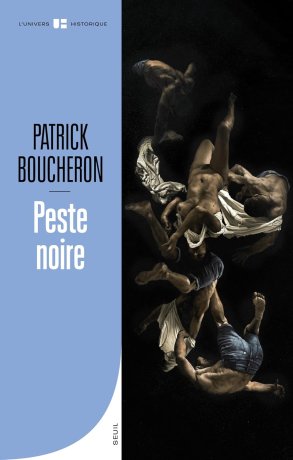
An unparalleled demographic catastrophe, the Black Death disrupted the economic, social, and cultural balance of medieval Europe in the 14th century. Long considered a major turning point, it now appears as an indicator of the structures, limitations, and resilience of medieval societies.
|
Human history is marked by brutal encounters with pathogens capable of spreading across multiple continents (and thus, of causing pandemics), and sometimes across the whole world. The most recent episode is, obviously, that of Covid-19, but the most brutal undoubtedly remains the Black Death of the fourteenth century – or more precisely, at least as far as Europe and the Mediterranean are concerned, the plague of 1347-1352, which was able to cause the death of about half of the population of these regions (the estimate remains uncertain), that is, about fifty million people [1]. Not only did the plague deeply scar the consciences of the survivors, but it led to important changes in culture, in the West and beyond it. Equally important were its demographic and economic consequences: the terrible pandemic, whose effects were amplified and prolonged by the frequent plagues that followed it, caused a persistent scarcity of people. In that way, however, it also had positive consequences (obviously, restricted to those who were lucky enough to survive), leading to an increase in the per capita availability of resources, an improvement in real wages and, more generally, in the conditions of workers, and a reduction in economic inequality.
The strange clamour of the present
Given its absolute centrality in the history of the world, and certainly in that of Europe, rivers of ink have been dedicated to the Black Death [2]: now also by Patrick Boucheron, with his imposing book Peste noire. Something that should be clarified immediately is that this is the work of a renowned expert on the Middle Ages, professor at the Collège de France in Paris and the author of many ambitious and successful books, but not a specialist in the plague or other epidemics. Boucheron’s interest in the plague, as he explains in the introduction to the book, stems from the experience of Covid-19. The author then experimented, as we all did, “the strange clamour produced by the irruption of the present in things pertaining to the past”. He then tried –as a good university professor– to make this situation understandable, to himself as well as to others, through learning and teaching.
The book, then, originates from two years of courses delivered at the Collège de France, during which Boucheron immersed himself in the recent literature on the plague, which he must no doubt have found surprising for many reasons. Here lies the advantage of the non-specialist: observing with a fresh and curious perspective what others take for granted, connecting it to one’s own competences, and finally, presenting it –in the shape of a book and in a very effective way– to a broad public, itself mostly composed of non-specialists. To be clear: as an experiment in (very) high-level scientific popularization, Peste noire is a complete success. It is a book meticulously pieced together, generally very well informed, and detailed without becoming pedantic. The writing style is undoubtedly captivating, although sometimes too emphatic. It would be incorrect to state that this is an essay that reads like a novel, also because its aim is certainly not to compete with works of fiction. Instead, it is fair to say that it is a highly accessible book, which will not fail to engage those educated and curious readers who will not feel intimidated by its more than 500 pages.
History in the genes
The book begins by discussing the issue of the identification of the plague, narrating the stories of those protagonists of the nineteenth-century “bacteriological revolution” who exploited the opportunity of the Hong Kong epidemic of 1894 to try to isolate the pathogen that had been able to cause so much ruin to human societies; the winner of this scientific race was Alexandre Yersin, a Swiss doctor, naturalized French, and a student of Louis Pasteur. The retelling of these vicissitudes introduces a discussion of the nature of the pathogen itself and of its epidemiological and biological characteristics. From the very beginning, we are informed of how recent research, based on the traces of DNA preserved in skeletal remains excavated from plague cemeteries, is radically transforming what we thought we knew about the origins and the diffusion of the pathogen. Clearly, Boucheron was very impressed by these novel scientific results, which are indeed extremely interesting – even if (and the author explicitly recognizes this) they remain far from providing an adequate answer to all our questions, including those of a strictly epidemiological nature. For example, why did the plague disappear from Europe and the Mediterranean after the eighth century, at end of a long epidemic cycle which had begun with the so-called Justinianic Plague of 541-542? And why, in the seventeenth century, did the plague affect the South of our continent much more severely than the North, favouring the displacement of the centre of the European economy from the Mediterranean to the Baltic [3]?
The book then proceeds to explore aspects about which our knowledge is today far more extensive compared to just a few years ago, and often is in stark contrast with what used to be given for granted, or almost so. These include the geographic origin of the Black Death, which very recent studies have placed in the Tian Shan region in central Asia in 1338 [4] (a hypothesis that probably will remain highly debated for a long time), as well as, and more importantly, its diffusion to non-European areas, particularly in Asia and in sub-Saharan Africa. This is a key step in moving beyond an approach that for too long has tended to focus almost exclusively on Europe and the Mediterranean.
In the rest of the volume, however, the attention shifts back to Europe, to account for the accumulated research carried out by generations of historians of various specializations and nationalities. To be clear: the linguistic skills of Boucheron are impressive and have allowed him to overcome the limitations that too often are found in books that are certainly ambitious, but are built upon research published almost exclusively in English. Among the covered topics we find, for example, the estimation of the number of deaths caused by the epidemic, its impact on income and wealth inequality (which, at least in Europe, declined considerably: a very rare circumstance in the history of the West [5]!), and the practices and doctrines developed to try and contain the diffusion of the contagion. The book concludes with an analysis of the impact of the Black Death on collective psychology, culture and the forms of artistic expression, providing a brief outline of the last plagues that took place in Europe and elsewhere, and highlighting how the Black Death has left a mark in literature and art across the centuries.
“Big picture” and “everyday life”
As already mentioned, there is much to like in Peste noire. From the point of view of economic history and of historical demography –which is the perspective of the author of this review– it is certainly positive to bring to the fore what we know about the “everyday life” during the terrible pandemic, not only to provide captivating examples, but also to remind us that, beyond the “big picture”, which today tends to dominate the international scholarly scene (also due to the growing interaction between historical research and the “hard sciences”), there remains a micro-historical and human –as well as “humanistic”– dimension which is equally important. Given that this is a book written by a non-specialist with the rather clear aim of being accessible, it would be ungenerous to highlight a series of small imprecisions, perhaps typos, which are probably unavoidable in an essay based on such a vast body of literature [6].
From a scientific point of view, Boucheron’s choice of uncritically adopting a traditional division of the history of plague into three “pandemics” is questionable. To clarify, the Black Death would mark the beginning of the second of such pandemics, which would end only in the eighteenth century, while the third “pandemic” would have originated in the Yunnan region of China in the nineteenth century and would continue to this day. This division does not correspond to the correct way of using the term “pandemic” which properly indicates, as highlighted at the beginning of this review, an epidemic capable of spreading across many continents [7]. So, the Black Death of the mid-fourteenth century was a pandemic unto itself, distinct from subsequent episodes of re-diffusion of the contagion.
It should also be highlighted that some claims, such as the one according to which “our books of history do not organize their storytelling with a part before and one after the break [of the Black Death]” (p. 18), are probably true in general, but not if applied to specific sectors of historical research – surely not to economic history which, in recent decades (and from well before the Covid-19 crisis), has identified the terrible pandemic as a fundamental watershed in human history [8]. Thus, some scholars have identified (rightly or wrongly) in the Black Death the origin of the long-term success of Western Europe over East Asia [9]; the onset of a growing divergence, between Northern and Southern Europe, in wage levels and in the rate of female participation in the workforce [10]; a radical re-balancing in the ratio between population and resources; and so on. Finally, the book devotes much attention to developments taking place in the nineteenth and early twentieth century, such as, for example, the already mentioned “race” to identify the pathogen – but the early modern period, which has been the focus of many of the most innovative studies of the last few years (also due to the availability of much more numerous and varied historical sources compared to the Middle Ages) remains curiously under-represented.
The historian and the scientist
To conclude, there is a point about which Boucheron seems to have found a good balance: the relationship between historical investigation and the hard sciences. In fact, when analyzing and re-elaborating the findings produced by the scientific literature (particularly the literature based on paleo-biological data and phylogenetic reconstructions), by which he is clearly, and understandably, captivated, Boucheron avoids falling into the trap of relying blindly on it. This, to the eyes of someone who has witnessed the development of such literature over the years, would be very risky indeed, given the tendency of the most recent studies to radically modify, if not entirely overturn, previous ones: no less “scientific”, but based on fewer case studies and conducted using less refined laboratory techniques and methods of data analysis. As rightly stated by the author, “science will never abolish an historian’s question” (p. 74); at most, it will displace and expand it – and in this way, it will make it more interesting.
Patrick Boucheron, Peste Noire, Paris, Seuil, « L’Univers historique », 2026, 576 p., 27 €.
by , 11 May
Share this article
Find us here :


To quote this article :
Guido Alfani, « The lesson of the Pandemic », Books and Ideas , 11 May 2026. ISSN : 2105-3030. URL : https://laviedesidees.fr/The-lesson-of-the-Pandemic
Nota Bene:
If you want to discuss this essay further, you can send a proposal to the editorial team (redaction at laviedesidees.fr). We will get back to you as soon as possible.
You might also like


Footnotes
[1] Guido Alfani, « Epidemics and Pandemics: From the Justinianic Plague to the Spanish Flu », in C. Diebolt, M. Haupert (eds.), Handbook of Cliometrics. Berlin: Springer, 2023.
[2] To mention just some more or less recent books: Samuel K. Cohn, The Black Death Transformed, Arnold, 2002; Oleg Benedictow, The Black Death 1346-1353: The Complete History, Boydell Press, 2006; Monica H. Green (ed.), Pandemic disease in the Medieval world. Rethinking the Black Death, Arc Medieval Press, 2015; Bruce Campbell, The Great transition: climate, disease and society in the Late Medieval world, Cambridge University Press, 2016.
[3] Guido Alfani, « Plague in Seventeenth Century Europe and the Decline of Italy: an Epidemiological Hypothesis », European Review of Economic History, vol. 17, 2013, pp. 408-430.
[4] Maria A. Spyrou et al., « The source of the Black Death in fourteenth-century central Eurasia », Nature, Vol. 606, 2022, pp. 718-724.
[5] Guido Alfani, « Inequality in history : A long-run view », Journal of Economic Surveys, vol. 39, n° 2, 2025, p. 546-566.
[6] For example (p. 34), the 1630 plague killed in Northern Italy (probably) about two million people, not one million as indicated by the authors.
[7] John M. Last, A dictionary of epidemiology, 4th edn. Oxford University Press, 2001, p. 131.
[8] For an updated synthesis, see Guido Alfani and Tommy E. Murphy, « Plague and Lethal Epidemics in the Pre-Industrial World », The Journal of Economic History, vol. 77, no. 1, 2017, pp. 314-343; Remi Jedwab, Noel D. Johnson, and Mark Koyama, « The Economic Impact of the Black Death », Journal of Economic Literature, vol. 60, no. 1, pp. 132–178.
[9] Gregory Clark, A Farewell to Alms, Princeton University Press, 2007.
[10] Tine De Moor, Jan Luiten Van Zanden, « Girl power: the European marriage pattern and labour markets in the North Sea region in the late medieval and early modern period », The Economic History Review, vol. 63, 2010, pp. 1-33; Mattia Fochesato, « Origins or Europe’s North-South Divide: Population changes, real wages and the ’Little Divergence’ in Early Modern Europe », Explorations in Economic History, vol. 70, 2018, pp. 91-131.
Our partners


Sections
Keep in touch
© laviedesidees.fr - Any replication forbidden without the explicit consent of the editors. - Mentions légales - webdesign : Abel Poucet