


By analyzing nearly 8,000 recruitments for assistant professor positions in France between 2017 and 2024, Olivier Godechot, Rachel Issiakou, Yann Renisio, and Adrien Rougier revisit the long-standing and controversial issue of academic inbreeding.
|
The issue of academic inbreeding [1], i.e., the preferential recruitment of former university members as teacher-researchers, is a recurring topic of debate in France [2]. Some see it as a form of clientelism, undermining the fairness and quality of academic recruitment. Others see it as a logic of efficiency, favoring those already adapted to the local ecosystem who are likely to be more immediately efficient in their role. Yet others see it as a reflection of the preferences and inertia of the candidates themselves [3]. It has prompted arguments for and against its regulation, in addition to academic research seeking to measure its extent and effects.
One of the co-authors of this article was doubly involved in this debate, promoting the prohibition of inbred recruitment in 2007 [4] and conducting an initial empirical assessment of the phenomenon in 2008 [5]. In the absence of data documenting individual recruitment, they approached this phenomenon using the database of PhDs defended between 1970 and 2002. By comparing the probability of an inbred or outbred doctor subsequently becoming a PhD supervisor at a given university, he and his coauthor estimated that, on average, inbred PhDs were 18 times more likely than outbred PhDs to become supervisors a few years on. This estimate was highly imperfect due to the difference between recruitment as assistant professor and defense of the first supervised PhD [6]. Furthermore, the time lag between these two stages of academic life meant that only an outdated approximation of the phenomenon was possible, providing information on inbreeding between the mid-1970s and early 1990s.
In the wake of, and sometimes preceding, the debates of the 2000s, various bodies (including the Ministry of Higher Education and Research, certain universities, and academic disciplines) attempted to address inbreeding.
Since the early 2000s, the Ministry of Higher Education has developed various indicators to capture the phenomenon. The “inbred recruitment rate” and the “academic mobility index,” now serve both as statistical measurement tools and as steering and incentive tools in the evaluation of institutions and laboratories. The 2008 reform of competitive recruitment exams (concours de recrutement), which transformed “committees of specialists” into “selection committees,” increased the proportion of members from outside the university from one-third to one-half with the stated aim of reducing inbreeding [7].
One discipline, mathematics, collectively decided to ban inbred recruitment in the early 2000s. Its members pledged to refrain from recruiting their former doctoral students whilst serving on their university’s recruitment committees. This led to the near-total disappearance of inbred recruitment in mathematics departments by 2005 [8]. In other disciplines, such as economics, certain departments, influenced by US practices, adopted similar norms [9]. From the mid-2000s onwards, certain disciplines (political science [10], followed a few years later by sociology) began to collect and publish data on recruitment: the composition of specialist committees and then selection committees, lists of candidates interviewed and ranked. This transparency initiative potentially serves a monitoring function and may encourage self-regulation to avoid criticism for obvious forms of clientelism.
Finally, some academic institutions, such as Sciences Po since the early 2010s, tacitly exclude their former doctoral graduates from consideration when recruiting assistant professors.
At a time when academic bodies in France and abroad [11] are, with varying degrees of determination and success, attempting to reduce academic inbreeding, it is useful to revisit the phenomenon with a statistical lens. In so doing, we might measure how far we have come and, if necessary, identify what practices should be encouraged in the future.
In this article, we examine academic inbreeding in competitive recruitment exams for assistant professor-level tenured positions in France (“maîtres de conférences”). We define an inbred candidate as someone who earned their PhD at the hiring university. Before presenting our method and results, we begin by reviewing the terms of the scientific and normative debate underlying this study.
What does it mean to be inbred?
The definition of inbreeding (in terms of the people, candidates or recruits, who can be described as “inbred”) is subject to disagreement, and carries different meanings depending on the country and institutional context [12]. The most common definition of an “inbred” recruit is a person who is hired by the institution at which they completed their doctorate. In practice, this inevitably raises the question of the conditions and timeframe under which an inbred person ceases to be inbred. Institutions that refuse to recruit inbred scholars generally authorize silver-cording [13], i.e. the recruitment of a former doctoral student who, after obtaining their doctorate, has obtained a teaching and research position, preferably a permanent one, at another institution. This mobility is considered a guarantee of quality and reduces the risk of favoritism during subsequent recruitment at the initial institution.
In Europe and North America, the definition of inbreeding is based primarily on doctoral degrees. In other countries, such as Japan and Korea, other degrees, such as bachelor’s degrees, are taken into consideration when determining whether a person is inbred. In France, related forms of proximity are sometimes associated with inbreeding. For instance, the recruitment of a person working at the university that is recruiting a non-tenured teaching and research position as a temporary teaching and research assistant (ATER), postdoctoral fellow, or research assistant [14]. Similarly, in competitive exams for full professorship, assistant professors from the same university are considered inbred candidates, whether or not they hold a doctorate from that university. Although this form of inbreeding is much more prevalent than that which prevails at the lower level, it is generally considered less problematic [15]. In many countries, particularly the United States, the transition from assistant to associate professor, or from associate to full professor, is an internal promotion, without competition from outbred candidates.
Ongoing debates on inbreeding
Inbreeding, and the debate it provokes, are long-standing phenomena. At the beginning of the 20th century, Charles W. Eliot (then president of Harvard) expressed concerns about the consequences of this practice, one common at the time [16]. As early as the 1930s, Eells and Cleveland conducted remarkable work on the extent and effects of inbreeding in the United States [17]. They estimated that 34% of US academics in 1932 were “inbred.” Thirty years later, Hargens estimated a lower rate of inbreeding, 16%. Nonetheless, this estimate was significantly higher than the 1% expected in the absence of a preference for inbred candidates [18].
Since the 2000s, there has been a proliferation of research on academic inbreeding. The employment of academics by their alma mater appears a widespread phenomenon, transcending disciplines and national contexts [19]: Norway, Portugal, Italy, Spain, Slovenia, Russia, Ukraine, Mexico, Turkey, Argentina, Brazil, South Africa, Japan, South Korea, etc. By contrast, inbred recruitment seems to have largely disappeared in the United States since the 1970s and 1980s. Although no formal rule prohibits the recruitment of former students, most departments (apart from certain prestigious law schools such as Yale and Harvard [20]) have adopted a norm of not doing so.
Scientific studies, generally critical of inbreeding, highlight that this practice undermines both the fairness of university recruitment and the quality of academic research.
For various reasons, PhD supervisors will have an interest in seeing their doctoral students hired by their university. Whether for conducting research or organizing teaching, supervisors stand to benefit from prolonging the particular working relationships and idiosyncratic power dynamics they develop with their students [21]. Professors at the head of “fiefs” or “cliques” benefit from recruiting former students into their departments if these recruits support their decisions or pursue and reproduce the same type of research. Additionally, PhD supervisors develop personal relationships with their doctoral students during the PhD process and want to help them enter the profession by protecting them from competition [22]. These various considerations may, consciously or unconsciously, lead former doctoral students to be favored over outbred candidates with equivalent or superior academic records.
Inbreeding also affects the characteristics of the research produced at the university. Numerous studies show that there is a negative correlation between inbreeding on the one hand, and both the volume and bibliometric impact of published work on the other. This does not, of course, prevent many inbred scholars, such as Albert Einstein in Zurich, from being excellent researchers. Nonetheless, “inbred” academics in Mexico publish 15% fewer articles overall than non-inbred ones [23]. This relative deficit amounts to 11% in Portugal [24]. In addition, the work of inbred recruited academics is, on average, less cited and less frequently published in international journals with a large audience [25].
Two mechanisms explain this relationship: a selection effect and an immobility effect. On the one hand, if inbred candidates are favored over outbred ones precisely because they are inbred, they will, on average, be less selected on other factors, particularly scientific credentials or ability. On the other hand, academic mobility is a factor in the renewal of networks and, consequently, of perspectives and discussions that promote scientific productivity [26]. Inbred recruits, due to their initial immobility, would have less access than outbred recruits to this fruitful mix of ideas and practices.
Contrary to these anti-inbreeding arguments, other explanations for inbred recruitment have been put forward which, if not in favor of inbreeding itself, at least oppose explicit regulation of this type of recruitment. According to some studies, inbreeding is not one of the causes of academic dysfunction, but one of its consequences [27]. When recruiting, universities are in a position of information asymmetry. They are more familiar with the quality, motivation, commitment, and loyalty of inbred PhD graduates (having been able to observe them during their years of PhD work) than they are with those of outbred PhD graduates. In a context where little time and resources are devoted to recruitment, choosing an inbred candidate minimizes the risk of recruitment failure (candidates not accepting the offer) and of “bad” recruitment (hiring someone who ultimately does not settle in the university town, does not get involved in the department, does not cooperate with colleagues, or asks for a transfer at the first opportunity). In addition, inbred recruits are already familiar with the academic environment, having spent several years there. This significantly reduces the cost of learning, particularly as regards administrative tasks and teaching [28].
A final factor helps explain inbred recruitment: candidate preferences. Much like the rest of the population, PhD graduates are not particularly mobile [29]. Since doctoral studies end relatively late (the average age for obtaining a PhD in France is 32), doctors will generally have a partner or family, and in some cases children. This can make geographical mobility costly to organize [30], especially since French universities do not negotiate the recruitment of partners (spousal hiring), as is sometimes the case in the United States. It has also been suggested (though never explicitly measured) that gender dynamics prevalent in heterosexual couples renders the restriction of inbred recruitment detrimental to the academic recruitment of women [31] .
The various analyses of inbred recruitment presented above can be seen as complementary rather than contradictory. However, in the debate on whether inbred recruitment should be regulated, each side will tend to emphasize either the former or the latter. The estimates provided below for France will not settle the controversy, but they may help to shed some light on it.
Three sources for assessing inbreeding
We used three different sources to estimate the prevalence of inbreeding: recruitment of assistant professors (maîtres de conférences), qualifications [32], and PhDs defended. First, we compiled a database of recruitments (n = 7,889) from lists of “assistant professor appointments” published between 2017 and 2024 on the website of the Ministry of Higher Education and Research [33]. The compilation of these lists allows us to obtain recruitment figures close to those published by the ministry in its annual reports (see Figure A1, showing that only 2 to 15% of recruitments are missing). Similarly, we compiled a database using the lists of qualifications published on the ministry’s website. These lists identify qualified individuals by the 57 disciplinary divisions (called “sections”) of the National Council of Universities (CNU) for the period from 2012 to 2024 (n = 107,000). Those qualified in the same section as the position advertised and/or the person recruited make up the potential competition space for a given position. Finally, in order to identify the institutions where candidates (both the recruited individuals and their potential competitors) defended their PhDs, we combine the open-access database entitled “PhDs defended in France since 1985” and the application programming interface (API) of theses.fr, covering the period 1999-2024 (n = 313,000) [34].
Whilst our 2008 article could have been criticized for using approximate and fragile data (the analysis of which relied on numerous underlying assumptions [35]) these new sources allow us to accurately track the transition from doctoral studies to recruitment into assistant professorship.
However, in the absence of a unique identifier, the comparison between these three databases is based solely on the first and last names. Due to variations in spelling (accents, particles, compound names, typos, inversion of first and last names) and the problem of homonyms, this identification remains subject to two types of error: under-identification (identifying the same individual as two different people) and over-identification (identifying two different individuals as one person). We implemented rules to limit these two pitfalls. First, we remove all particles and accents. Second, in the case of compound names, we test all possible combinations. Finally, when the same qualification corresponded to several PhDs, we selected the most plausible match based on the proximity between the qualification section and the discipline of the PhDs.
In so doing, we successfully identified doctoral theses for 81,000 of the 107,000 qualifications (Table 1). The fact that we only found doctorates for 75% of the qualifications owes largely to the fact that those who obtained their doctorates abroad are absent from the data. However, we cannot rule out identification failures.
Similarly, we successfully identified at least one qualification for 7,464 of the 7,889 assistant professors recruited. The remaining unmatched 5% owes in part to the fact that people previously employed (either in France of abroad) in a position at the level of assistant professor or equivalent may be exempted from qualification requirements. Inconsistencies in the spelling of first and last names across databases may also play a role. Once all three sources are combined, we successfully match 5,928 recruitments with both a qualification and a doctoral thesis.
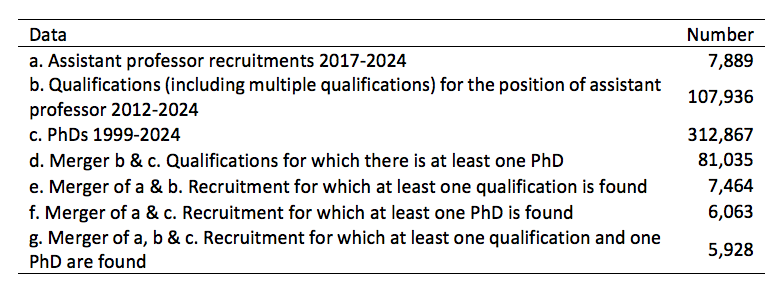
Table 1. The three databases used and their matching
Note: There are 7,889 recruitments for assistant professors in our database.
The ministry of Higher Education and Research measures inbreeding (i.e., the preference for inbred candidates) in recruitment from competitive exams as the simple proportion of inbred scholars among recruits. However, an inbred recruitment rate of 20% implies different dynamics in a small university that produces 0.5% of qualified candidates, and a large university that produces 10% of qualified candidates. We cannot, therefore, limit ourselves to this metric. To accurately estimate inbreeding, we must approximate the pool of potential competitors [36].
To do so, we follow a method similar to that used in our 2008 article. Unless they had already been recruited elsewhere in a previous year, we consider anyone qualified in either the CNU section of the job posting or the section of the recruited candidate in the four years prior to the publication of the job listing a potential candidate. We do this for two types of fields, one broad and the other narrow (Table 1). In the broad field, we assume that if a PhD cannot be found, then the recruit obtained their doctorate abroad and is de facto an outbred candidate. This approach tends to somewhat underestimate inbreeding (as shown in Figure A1). Some inbred recruitments will be artificially counted as outbred due to a failure to match with the PhD file.
In the narrow field (Table A1), we focus on the subset of data for which we have the most information, namely individuals who qualified in the previous four years and for whom we found a PhD in the PhD database. We exclude candidates and recruits who completed their PhDs abroad. We also exclude recruits whose last qualification dates back more than four years and who may have been recruited as part of a mobility program. This restriction is more comparable to our 2008 method and allows us to use information on the institution where the PhD was defended to calculate the distance between the position offered and the place where the doctorate was obtained. However, it also leads to a slight overestimation of inbreeding, since it naturally excludes the outbred recruitment of individuals who obtained their doctorate abroad.
Finally, preference for inbred candidates can only be measured if outbred candidates are competing with inbred candidates. However, in some cases, there are no inbred candidates because the recruiting department has not produced any qualified PhDs in the section where the position is open. These cases are excluded from the analysis. We only consider recruitment where inbred and outbred candidates may be in competition.
Table 2 gives an initial overall result. In our database, the proportion of inbred candidates is 18% among the assistant professors recruited, 20% when restricted to recruitments where inbred and outbred candidates compete, and 27% in the narrow field defined above. In the absence of a preference for inbred candidates, we would expect 2.6%, 2.9%, and 5.2% of inbred candidates among the assistant professors recruited in these three respective fields. This is far from the case.
We summarize this preference for inbreeding using the Mantel-Haenszel odds ratio. This approach corrects for the effects of department size and other factors [37]. Inbred candidates are between 9.5 times (broad field) and 10.7 times (narrow field) more likely to be recruited than outbred ones. Inbreeding is therefore less pronounced than in our 2008 estimate, which covered the 1970s and 1980s, for which we found an odds ratio of 18. Nevertheless, it remains high.
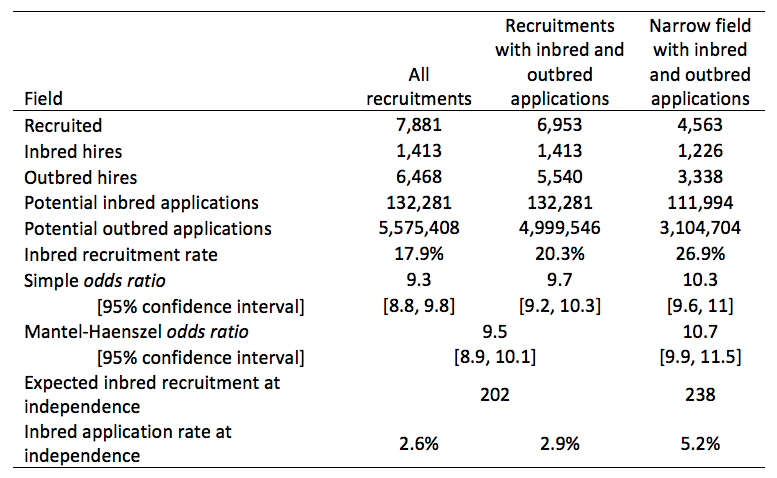
Table 2. Overview of inbreeding
Note: The first column represents our reconstruction of the structure of competition between inbred and outbred candidates for the entire population. In the second column, we restrict ourselves to recruitments for which there are potential inbred candidates, i.e., individuals who were qualified in the four years prior to the vacancy in the same section as the position or as the person recruited. In the last column, we restrict ourselves to the narrowest field, namely recruitments where there are both outbred and inbred candidates, where the job opening and the recruit’s qualifications coincide, and where we restrict ourselves to qualified candidates between t and t-3 whose PhD we found in the PhD file. The odds ratio can be read approximately as a ratio of chances. The Mantel-Haenszel odds ratio corrects for size effects related to the number of applications. Inbred applicants are 9.5 times more likely than outbred applicants to obtain an assistant professor position.
In which disciplines is this phenomenon more or less pronounced? Figure 1 shows the variation in our indicator of inbreeding (the Mantel-Haenszel odds ratio, hereinafter referred to as OR) by CNU disciplinary section. It varies from 0.5 in fundamental mathematics to 29 in physiology.
As mentioned above, starting in the early 2000s, mathematics, particularly fundamental mathematics, adopted an explicit norm against inbred recruitment [38]. For fundamental mathematics, the OR is 0.5, well below 1 and in fact almost zero [39]. This signals a deliberate choice to be “anti-inbreeding” or, so to speak, “outbredist.” Nevertheless, the applied mathematics and mathematics applications section does not quite follow this norm. These still seem to favor inbred applicants slightly, who are three times more likely to be selected than outbred applicants.
Except mathematics, inbred applicants are significantly favored in all disciplinary sections. The hierarchy of our inbreeding indicator resembles the one we highlighted in our 2008 article. It challenges several preconceptions. There is no clear divide between the natural sciences and the humanities. Among the least inbred sections, alongside mathematics, we find a section on fundamental physics (Elementary Constituents, OR = 3), as well as several sections on foreign languages and literature and philosophy (OR = 4). Some natural science sections, such as materials chemistry (OR = 16), “biochemistry and molecular biology” (OR = 23) and, even more so, physiology (OR = 29) are, on the other hand, highly inbred. Overall, the engineering sections are very inbred, “mechanics, mechanical engineering, and civil engineering” (OR = 17) or “electronic engineering, photonics, and systems” (OR = 21). Yet these sections are joined at the top of the hierarchy by humanities and social science sections such as private law (OR = 17) and management sciences (OR = 16).
The existence of the higher education competitive examination (“agrégation du supérieur”) in the sections of law, political science, and management sciences, which effectively requires mobility in full professor recruitment, does not seem to be a crucial factor in greater tolerance for inbreeding at the assistant professor level. In fact, the tendency toward inbreeding is weaker in public law (OR = 7) and political science (OR = 6) than in the sections mentioned above.
Some authors have argued that competition from the private sector could explain inbreeding [40]. Indeed, in a tight labor market, universities should consider the fact that PhD graduates may prefer a position in the private sector in their own city rather than moving to another city. This logic may play a marginal role. However, it does not seem to adequately explain the significant differences in practice between disciplinary sections whose employment potential in the private sector would appear to be similar, such as economics (OR = 5) and management sciences (OR = 15) or “organic, inorganic, and industrial chemistry” (OR = 5) and materials chemistry (OR = 16), and does not account for the fact that inbreeding is strongly present in university towns where the private sector does not seem to overshadow the academic sector.
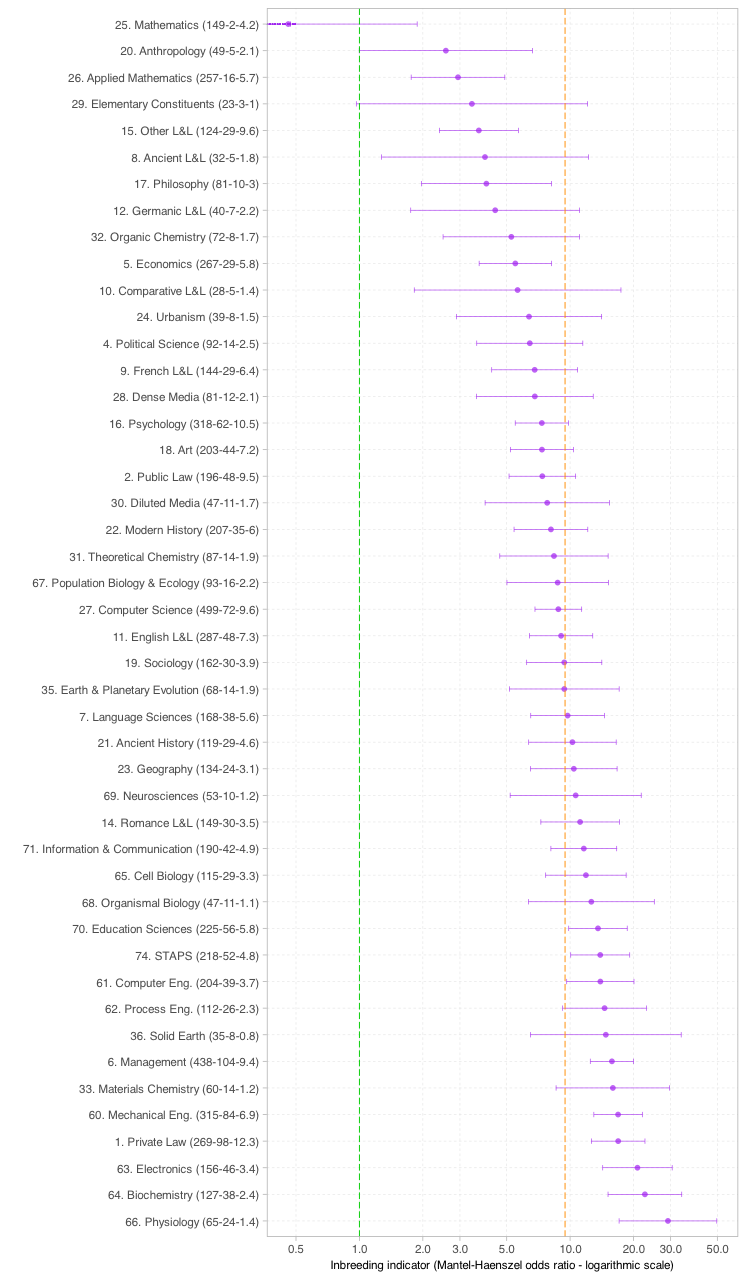
Figure 1. Variation in inbreeding by CNU disciplinary section
Note: We show only sections with more than 20 recruitments with competition between inbred and outbred candidates. The names of the disciplinary sections have been simplified. The orange line represents the overall preference rate for inbred candidates. The green line represents an abstract situation where there would be no preference for inbred or outbred candidates. Each section is followed by three numbers in parentheses: the first corresponds to the number of recruits, the second to the number of inbred recruits, and the third to the number of inbred recruits expected under the assumption of independence. In section 66 (physiology), where there are 65 recruits, including 24 inbred ones, and where 1.4 inbred recruits would be expected under the assumption of independence. In this section, inbred applicants are 29 times more likely than outbred applicants to be recruited.
Let us now look at the variation in inbreeding from one university to another (Figure 2). While for disciplinary sections our inbreeding indicator is highly correlated with the inbred recruitment rate calculated by the ministry (Figure A2), these two indicators differ significantly when used to compare universities (Figure A3). For example, at Sorbonne University (a merger of Paris 4 and Paris 6 universities), the inbred recruitment rate is 32%, as it is at the University of Valenciennes. However, at the former, potential inbred applicants account for 7% of all applicants, compared to 0.9% at the latter. Potential inbred applicants therefore have a higher recruitment rate at the second university than at the first. This is reflected in our inbreeding indicator, which stands at 6 for the first and 51 for the second.
Among universities that have recruited more than 20 candidates, our inbreeding indicator varies between 0 (Compiègne) and 163 (Antilles). A few institutions, therefore, appear to have embraced the anti-inbreeding norm. In particular, this is the case for the University of Technology of Compiègne, a pilot and experimental institution [41]. Alongside Compiègne we see several small institutions, a few institutes of political studies (Lille, Toulouse, Aix) as well as the Écoles Centrales in Lyon and Marseille. However, it is difficult to ascertain whether this reflects an anti-inbreeding norm or is simply a function of low recruitments numbers in these institutions.
The distribution of inbreeding by university is fairly similar to that evidenced in our 2008 article. In general, Parisian universities are less inclined towards inbreeding than universities in the provinces, particularly those in small towns. Some Parisian institutions have an inbreeding indicator that is significantly lower than that measured for the population as a whole. This is the case for INALCO (OR = 1.4), Paris 9 - Dauphine University (OR = 2.1), and Paris Est, which includes Créteil and Marne-la-Vallée Universities (OR = 2.4). However, there are also some very inbred Parisian universities, such as CNAM (OR = 45) and Paris-Panthéon-Assas University (Paris 2), which has the highest inbred recruitment rate (61%) on our list. Its place in the inbreeding hierarchy (OR = 19) drops slightly due to the quantity of qualified PhDs produced. Nonetheless, it remains high. Similarly, there are universities in the provinces, including small towns, for which the inbreeding indicator is lower and ranks in the first half. In addition to the aforementioned case of the University of Technology of Compiègne, certain provincial universities, such as Lyon 1 (OR = 4) or, to a lesser extent, Saint-Étienne (OR = 6), are among the least inbred institutions.
The very high level of the inbreeding indicator for overseas universities such as those in the Antilles (OR = 163) or Réunion (OR = 58) (as well as those in Polynesia, French Guiana, and Corsica—not represented due to low enrollment numbers) can undoubtedly be explained by a combination of geographical distance, insularity, and assertions of identity in a tense post-colonial context [42]. Nevertheless, it should be noted that certain provincial universities such as Artois (OR = 77) and Mulhouse (OR = 64) have higher indicators of inbreeding than Réunion, despite their proximity to the major university centers of Lille, Paris, and Strasbourg.
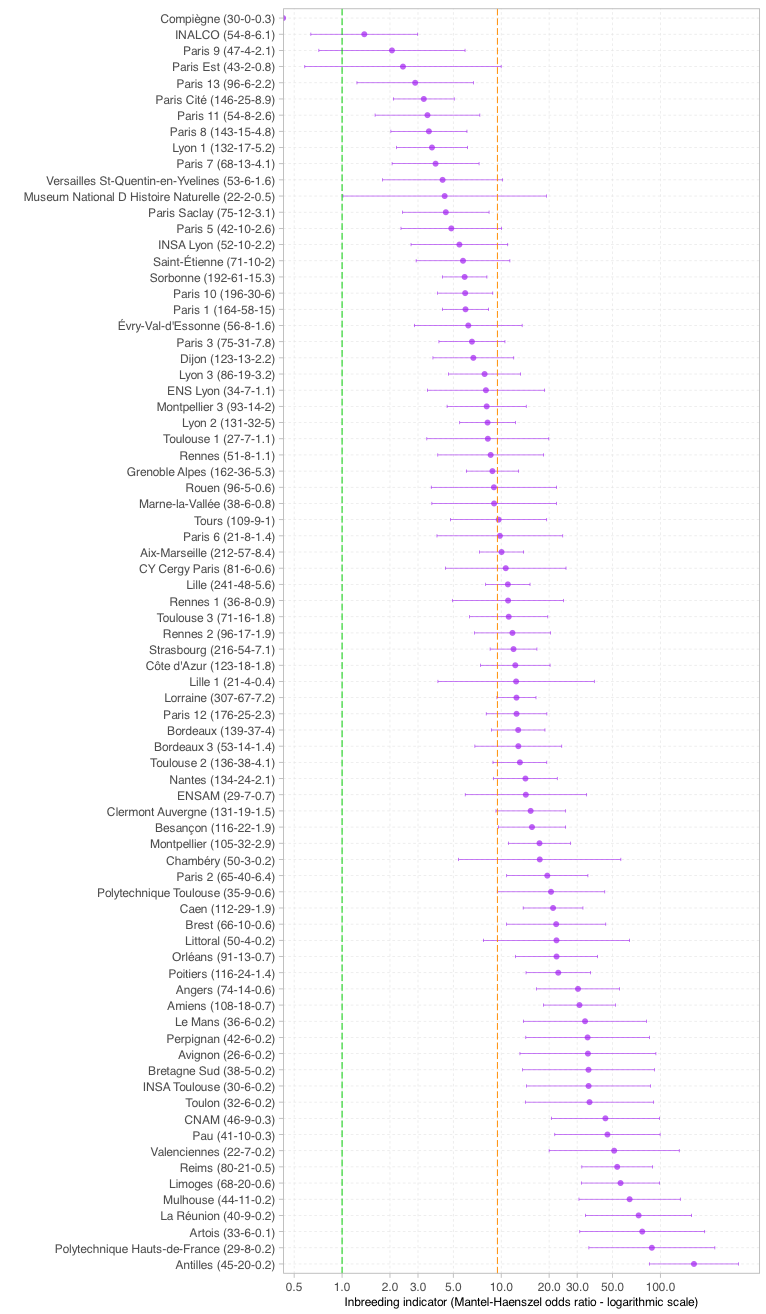
Figure 2. Variation in inbreeding by university
Note: Only institutions with more than 20 recruitments during the period are shown. For interpretation, see Figure 1.
A historical perspective
Having outlined the current state of inbreeding, let us look at its evolution in the previous decades.
Since the calculation of our inbreeding indicator is less precise for earlier periods, we first turn to the proportion of “inbred” recruits among new assistant professors published online by the Ministry of Higher Education and Research since 2002 (Figure 3). When this proportion is estimated at the national level, it correlates closely with our inbreeding indicator (see Figure A2).
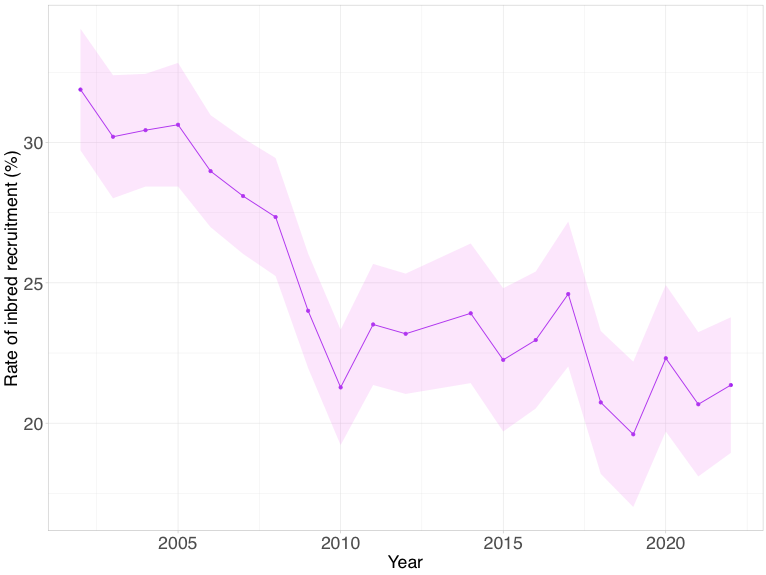
Figure 3. Evolution of the inbred recruitment rate in France (2002-2022)
Note: 21% of assistant professors recruited in 2022 obtained their doctorate at the university that recruited them.
Sources: Reports from the Ministry of Higher Education and Research
Sources: Reports from the Ministry of Higher Education and Research
The proportion of inbred recruits among assistant professors declined at a moderate pace from 2002 to 2008, falling from 32% to 27%. A more pronounced and significant decline is evidenced between 2008 and 2010, falling from 27% to 21% [43]. Although the decline in the inbred recruitment rate was already underway, it is highly plausible that it was accelerated by the 2008 reform, an initiative which increased the proportion of external members in the new selection committees from a third to one-half. However, after 2010, the downward trend of the 2000s came to a halt. The inbred recruitment rate stabilized between 22% and 24% between 2010 and 2017, falling slightly in 2018. Following this, it fluctuated between 20% and 22%.
By combining the ministerial data with our estimate of inbreeding for the period 2017-2024 and that of our 2008 article, we can reconstruct an approximate evolution of inbreeding (Figure A4). This is reminiscent of that described by Hugo Horta in other countries [44]. Initially, inbred recruitment is mainly concentrated in large universities, which produce the majority of PhDs. Subsequently, it spreads to small and new universities, which produce few PhDs, thereby increasing the inbreeding indicator. After peaking in the 1990s and 2000s, it declined due to regulatory pressures in certain disciplines and universities.
Figure 4 provides a detailed breakdown of this transformation by comparing the results of the 2008 article (which examined recruitment in the 1970s and 1980s) with those established for the recent period. Assuming that the two indicators are roughly comparable, we see a moderate increase in inbreeding in a few disciplines (above the blue dotted line); history, sociology, biology and, more notably, in education sciences. In most disciplines, however, inbreeding is declining. Certain disciplines experienced particularly marked declines. The change in mathematics (fundamental and applied combined) is spectacular, from a level of inbreeding close to the overall inbreeding during the first period to a virtual absence of inbreeding during the second. The decline is also very pronounced in economics. Here the inbreeding indicator fell from 38 to 5.
Beyond these two dramatic declines, the disciplinary hierarchy of inbreeding remains unchanged. Even though inbreeding is declining in engineering, law, and computer science, these disciplines remain highly inbred during the second period. Similarly, several disciplines which were less inbred during the first period (philosophy, anthropology, and literature), remain at the bottom of the hierarchy.
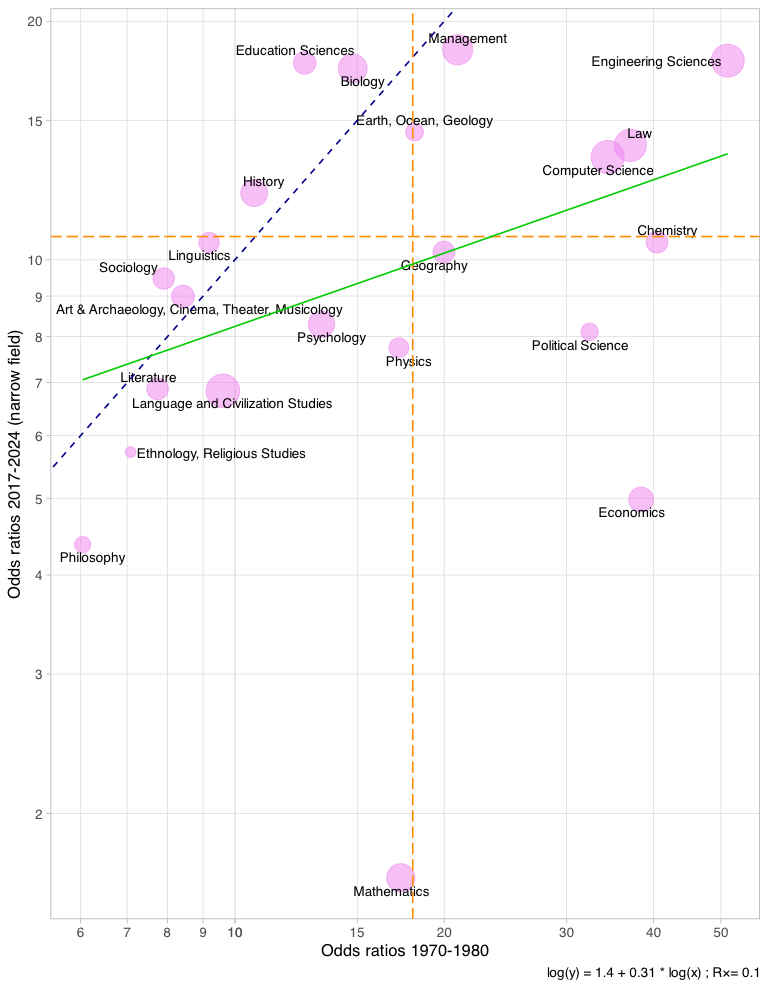
Figure 4. Evolution of inbreeding by academic discipline
Note: Whilst according to data from 1970-1980, inbred candidates were 17.3 times more likely to be recruited than outbred candidates in mathematics, this figure has fallen to almost 0 for the period 2017-2024. The blue line represents the line of equation x = y, which means that any discipline above it saw its Mantel-Haenszel odds ratio increase, while any discipline below it saw its odds ratio decrease between the two periods. The dark orange vertical and horizontal lines represent the odds ratio for the entire period, i.e., 18 for 1970-1980 and 10.7 for 2017-2024. The area of the points is proportional to the number of recruits within the discipline during the period 2017-2024. We have plotted the log-log regression line in green, weighted by the number of recruits in a discipline (equation at bottom right).
Figure 5 replicates the same exercise for academic institutions. Under the same comparability assumptions, it identifies four universities in which the inbreeding indicator has increased: the Sorbonne (a merger of Paris 4 and Paris 6), Paris 10 (Nanterre), albeit very moderately, and Paris 3 (Sorbonne Nouvelle) and Paris 2 (Panthéon-Assas), where the increase is more marked. In the latter case, the most inbred Parisian university has seen its OR double (from 13 to 24). Inbreeding has declined in other universities, notably at Paris 9 (Dauphine), Paris 11 (Orsay), Paris Cité (Paris 5 and 7), Lyon 1, Toulouse 1, Dijon, Rouen, Paris 13, and even more spectacularly at the University of Technology of Compiègne. The latter was strongly inbred in the 1970s and 1980s with an OR of 117, but has become resolutely anti-inbreeding with an OR of 0 in recent years.
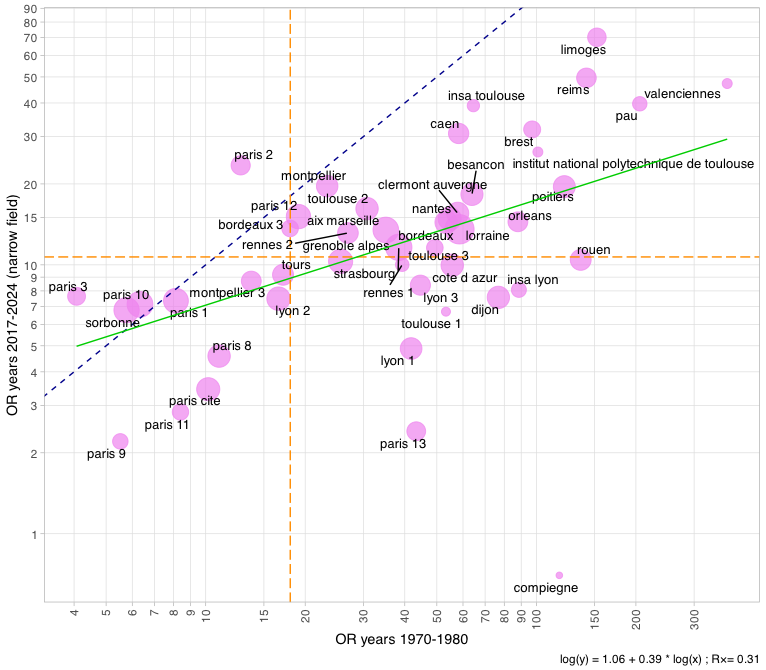
Figure 5. Evolution of inbreeding by university
Note: While inbred applicants were 5.5 times more likely than outbred applicants to be recruited by Paris 9 University in the 1970s and 1980s, this figure fell to 2.2 during the period 2017-2024. To represent the University of Compiègne on our logarithmic scale graph, we artificially set its odds ratio at 0.7 instead of 0. For further information, see Figure 4.
Spatial and/or relational proximity?
Our indicator of inbreeding, which measures the overrepresentation of inbred candidates among recruited assistant professors in relation to their weight among potential candidates, combines several forms of preference for proximity: spatial proximity on the one hand, and relational proximity on the other. Both forms may influence recruiting through the recruiting institutions or through the candidates themselves. As we detail in the first part, universities may prefer candidates who live nearby to avoid commuting time undermining their investment in the life of the department. Similarly, candidates may prefer to find a job in their urban area to avoid potential costs of travel, or of moving.
These spatial logic and relational logics, university preferences and candidate preferences are difficult to identify with any degree of accuracy. However, we can disentangle them somewhat by taking into account the distance between the institution where the PhD was defended and the institution where the candidate applied (for qualified candidates whose doctoral theses were identified in the PhD database).
Table 3 presents the results of this decomposition. Distance matters [45]. When the distance between the institution where the PhD was defended and the institution offering the position increases by 100 km, the probability of being hired decreases by 4% for all hires, 10% for those offered in metropolitan France, and 16% for those offered in the Île-de-France region (column 2). Taking distance into account leads to a significant downward revision of the advantage of inbred applications: the OR for inbred affiliation decreases by one-fifth to one-third depending on the field considered. But it is primarily the fact of whether or not the PhD was defended in the same urban area that leads to a decrease in the weight of the inbred affiliation variable (columns 3 and 4).
Nevertheless, even accounting for spatial distance and candidates’ residence in the same urban area, being an inbred candidate greatly increases the chances of being recruited. Inbred candidates are still 5.2 times more likely overall and 4.5 times more likely in Île-de-France to be recruited than are outbred candidates.
Thus, this small decomposition exercise, although imperfect, suggests that, at most, geographical proximity accounts for half of the importance of our indicator of inbreeding [46]. The other half is likely due to factors of relational and institutional proximity.
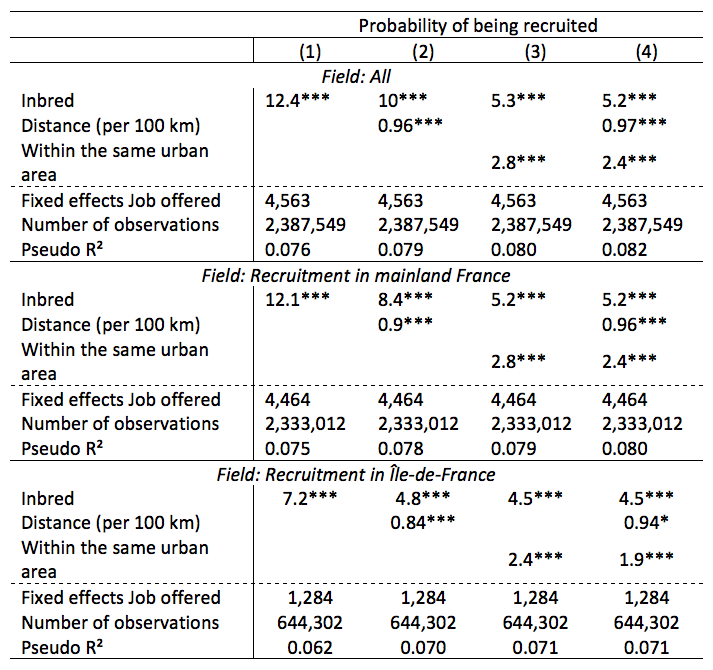
Table 3. Inbreeding and geographical proximity
Note: We use logistic regression models to model the probability of a potential candidate being recruited based on inbreeding status, the distance (as the crow flies) between the place of defense and the position offered, and whether these two locations belong to the same urban area. We introduce fixed effects for the position offered to consider the varying number of potential candidates. We present the odds ratios of the coefficients instead of the original coefficients of the logistic regression. The latter can be read as a first approximation as factors multiplying the probability of being recruited. In the first regression, being inbred increases the chances of being recruited to an institution by a factor of 12.4 compared to those of an outbred applicant. This figure is highly significant: there is less than a 0.1% chance that this effect is due to chance.
Our data allows us to examine a second argument sometimes put forward to explain, or even justify, inbred recruitment; that banning it could be particularly disadvantageous to women given the prevalence of unequal gender roles in couples and the greater difficulty for women to impose geographical mobility on her potential partner than the inverse [47].
Such a hypothesis would imply that women are more favored (or less disadvantaged) relative to men when they are inbred candidates than when they are outbred candidates. Table 4 shows that this is not the case. Our data indicates that women are disadvantaged in academic recruitment. The probability of being recruited decreases by 7% when the applicant is a woman. However, this disadvantage does not decrease when women apply locally. On the contrary, it is slightly accentuated, though not significantly. Two factors may explain this result. Perhaps the gender gap in labor market mobility observed at the societal level becomes negligible in academia and at this stage of one’s career [48]. It may also be that the gender gap in mobility is offset by a male-biased clientelism in inbred recruitment.
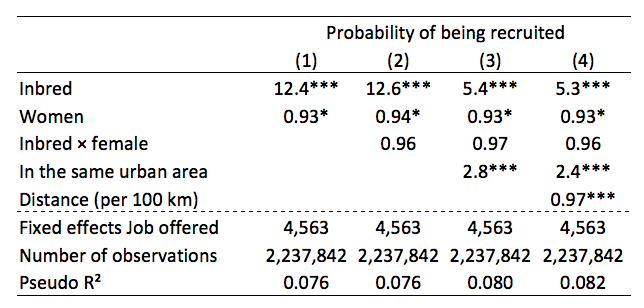
Table 4. Inbreeding and gender
Note: As in Table 3, we use logistic regression to model the probability of a potential candidate being recruited and present the odds ratios of the logistic coefficients.
Significance: * p < 0.1, ** p < 0.01, *** p < 0.001
Significance: * p < 0.1, ** p < 0.01, *** p < 0.001
Can we provide evidence to corroborate the relational and clientelistic nature of inbred recruitment? Numerous studies have attempted to do so by showing that the scientific productivity of inbred recruits is lower, on average, than that of outbred recruits [49]. In this article, we have not undertaken the enormous task of collecting all publications for the 100,000 qualified individuals in our database to determine whether inbred candidates have fewer publications than their potential competitors at the time of recruitment. Furthermore, a limitation of this work is that it focuses exclusively on quantifiable elements (in this case the number of publications) to the detriment of other more qualitative elements, or other aspects of the profession (teaching, involvement in administrative tasks).
Here, we present a more modest but comprehensive analysis of the potentially clientelistic nature of inbreeding, focusing in particular on its defensive dimension. Indeed, some colleagues use inbred recruitment as a means of defending their PhD graduates against the inbreeding of other institutions. In doing so, they are effectively attempting to protect their own PhD graduates from outbred competition. By generalizing this mechanism, we can hypothesize that universities are all the more inclined to offer their PhD graduates an inbred entry into academic careers because they know that doors will remain closed to them elsewhere.
To test this relationship, we plot our indicator of inbreeding against the outside success rate of PhD graduates by university in Figure 6 [50]. We find a significant negative correlation. The less chance doctoral graduates have in other universities, the more likely they are to be offered an inbred opportunity: on average, when the outside success rate decreases by 10% (i.e., multiplication by 0.9), our indicator of inbreeding increases by 8% (i.e., multiplication by 1.08). This relationship reflects certain contrasts, for example between the University of Paris Nanterre (Paris 10) and the University of Lorraine. In the former, PhD graduates succeed outside 1.6 times more than the average and the inbreeding indicator stands at 5.9. In the latter, PhD graduates succeed outside 0.65 times less than the average and the inbreeding indicator stands at 12. We also present in the appendix (Table A3) a slightly more sophisticated model showing that the probability of a university department to recruit an inbred applicant increases all the more so when the rate of recruitment of its PhD graduates outside the university was low during the previous year.
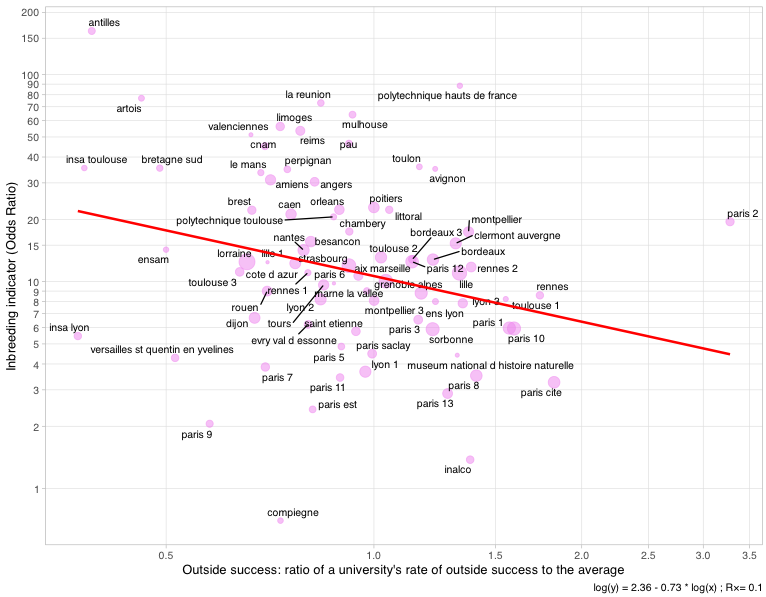
Figure 6. Outside success and inbreeding of a university
Note: PhD graduates from Paris 10 have 1.6 times higher rate of outside success than PhD graduates from other universities. They are 5.9 times more likely to be recruited at Paris 10 than outbred candidates. We use a simple ratio of outside success chances divided by the average outside success rate on the x-axis and the Mantel Haenszel odds ratio on the y-axis (see Figure 2). The red adjustment line is estimated by a log-linear regression weighted by the number of people recruited. In order to represent Compiègne on a logarithmic scale graph, we artificially set its odds ratio at 0.7 instead of 0.
The defense of PhD graduates by their awarding institutions against outbred competition is therefore one dimension of inbreeding. However, it does not explain everything, as shown by the wide dispersion of universities in Figure 6, which reflects a variety of configurations. Despite having a high level of inbreeding, Paris-Panthéon-Assas University (Paris 2) manages to export its PhD graduates. This suggests that inbreeding at this university is more elitist than defensive. Even though the universities of Compiègne, Paris Dauphine, and Paris Est have below-average results outside rate of success, they have a low or zero inbreeding indicator. This may reflect a deliberate strategy to move away from inbreeding, which may in the long term change the status and prestige of their institutions.
Finally, beyond its defensive aspect, inbreeding generates a global inequality: not all qualified candidates are lucky enough to see their former academic department open positions in the year they apply. Though rarely considered, this has massive effects. Table 5 shows the consequences of this supply effect. A qualified person has only a 2.2% chance of being recruited in a given year when no positions open in their former university department. On the contrary, a person who benefits from the inbred supply effect has a 4.7% chance of being recruited, mainly due to the 1.9% chance of being recruited locally. However, only 28% of candidates benefit from this inbred supply effect.
Over the four years following qualification, the gap narrows yet remains substantial. Only 44% of candidates have the chance to benefit at least once from an inbred recruitment option during the four years, giving them a 10.2% chance of being recruited. Those who do not benefit from the inbred option have only a 6.6% chance of being recruited during the qualification period.
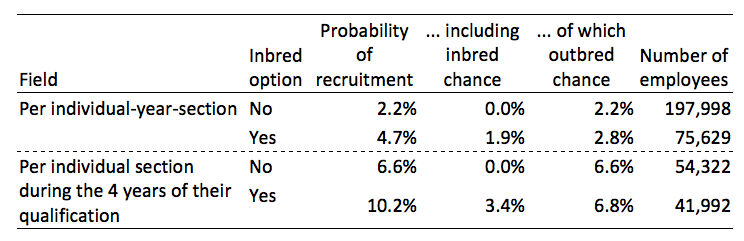
Table 5. Probability of recruitment based on the existence of an inbred recruitment option
Note: candidates who are fortunate enough to apply in a year when their university is recruiting in their subject area have a 4.7% chance of being recruited, including 1.9% locally.
Inbreeding, as we measure it, is therefore the result of several factors. It stems in part from a preference for geographical proximity on the part of both universities and candidates. But it also has a defensive, potentially clientelistic relational dimension: universities resort to it all the more when their PhD graduates have little chance of finding employment elsewhere. The importance of the inbred recruitment channel ultimately generates significant inequality between candidates who have had the opportunity to apply in a year when their former university opened a position and those who did not. While this situation is certainly not unusual in the job market, where local opportunities and personal networks are very important, it contradicts the norms of universalism and disinterestedness that universities promote [51].
How can we continue this movement?
Although inbreeding has declined over the past 20 years, it remains high. Inbreeding generates both inequalities and a reduction in the recruitment pool, to the detriment of average quality (which does not prevent many inbred recruits from being excellent and many outbred recruits from being disappointing). What’s more, the sharp decline of the 2000s came to a halt in the 2010s. For all those who feel that inbreeding has stabilized at too high a level, we propose ways to revive the momentum of the 2000s.
The ban on inbred recruitment
Though certainly restrictive, the ban on inbred recruitment (a measure proposed by one of the authors a few years ago, and supported by the Qualité de la science association) has the advantage of simplicity [52]. Former doctoral students could thus be officially excluded from recruitment at their alma mater until they have obtained a permanent academic position elsewhere. This measure would not prevent all forms of favoritism and clientelism (which may be based on other types of relationships). However, it would have the advantage of addressing the most common forms. Furthermore, it would make it easier to consider the abolition of controversial bodies, such as the CNU qualification or the agrégation du supérieur in law, political science, and management science, whose existence is sometimes justified by their role in limiting the extent of inbreeding [53]. The restrictive nature of the ban could possibly be mitigated by allowing for exceptions that take into account insularity, long distances to universities in metropolitan France, or the specificities of post-colonial contexts (Corsica, the Antilles, French Guiana, Polynesia).
However, the legal complexity of such a reform cannot be overlooked, as it could require a constitutional amendment to authorize a rule that is potentially discriminatory under current legislation on civil service examinations.
Self-regulation
A less rigid option would be for academic bodies, whether universities, departments, or disciplines, to voluntarily choose to avoid inbred recruitment, as was done in fundamental mathematics in the mid-2000s and certain institutions in the mid-2010s. There is no reason to believe that adopting this new anti-inbreeding norm would be detrimental to the disciplines, nor institutions, that uphold it. On the contrary, it would allow for more peaceful debates and a more thorough examination of the skills of candidates.
Parisian universities might play a leading role in this area. The Île-de-France region is home to numerous institutions, providing a large pool of outbred candidates living in the urban area. Therefore, geographical distance can no longer be cited as an obstacle to outbred recruitment. Furthermore, the Île-de-France region can count on its appeal to attract international applicants from world’s leading universities. The maintenance of a particularly high inbred recruitment rate at Paris-Panthéon-Assas University (Paris 2), where more than 67% of recruits are inbred between 2016 and 2022 (see Figure A5), and the increase in its inbreeding over the last few decades (see Figure 5) is surprising. This would appear to run counter to sound recruitment practices in prestigious institutions.
Incentives
We can only hope, of course, that reading this article will be enough to reignite debate and restart momentum towards reduction that stalled in the early 2010s. But it is unlikely to be sufficient. The Ministry of Higher Education and Research and universities could revive this process by increasing incentives for outbred recruitment. A simple objective, one that allows for exceptions, would be to aim for an inbred recruitment rate of 5% in the assistant professor competitive exam. As shown in Table 2 (narrow field column, last row), this rate corresponds to a situation wherein neither outbred nor internal candidates are disadvantaged. This rate can be translated into a simple recommendation: limit the proportion of inbred recruits in each university to one in twenty. Yet, it could be argued that this uniform merely balances chances between inbred and outbred candidates at the aggregate level and not in each university. In institutions that produce a larger proportion of qualified candidates, outbred candidates would be favored, while in institutions that produce few they would be disadvantaged. Whilst this is true, this recommendation has the advantage of encouraging large universities (often in Paris) which benefit from a larger recruitment pool, to play a leading role and break out of the endogamous mindset.
by & & & , 3 March
Share this article
Find us here :


To quote this article :
Olivier Godechot & Rachel Issiakou & Yann Renisio & Adrien Rougier, « Academic inbreeding: new estimates », Books and Ideas , 3 March 2026. ISSN : 2105-3030. URL : https://laviedesidees.fr/Academic-inbreeding-new-estimates
Nota Bene:
If you want to discuss this essay further, you can send a proposal to the editorial team (redaction at laviedesidees.fr). We will get back to you as soon as possible.
You might also like


Footnotes
[1] We would like to express our sincere gratitude to Alexandra Louvet for allowing us to use methods and results established with her in a previous article: Olivier Godechot, Alexandra Louvet, “Le localisme dans le monde académique : un essai d’évaluation,” La vie des idées, May 12, 2008 [english translation: “Academic Inbreeding: An Evaluation,” April 22, 2010]. We would like to thank Alexandra Louvet, Émiliano Grossman, Ulysse Lojkine, and Arsène Perrot for their kind reading and advice. We remain solely responsible for any imperfections in this work. This version is an English translation of “Le localisme universitaire, nouvelles estimations”. We created a first draft of the translation using DeepL and carefully revised it. We thank Niklas Ayris for his excellent work controlling and editing the current version.
[2] Judith Lazar, Les secrets de famille de l’université, Paris, Les empêcheurs de penser en rond, 2001; Yves Fréville, La politique de recrutement et la gestion des universitaires et des chercheurs, Information Report No. 54, Senate, 2001; François Clément, “Université : la foire à l’embauche,” Le Monde, June 27, 2007; Alain Trannoy, “Universités : quel mode de recrutement ?”, Le Monde, July 23, 2007; Olivier Beaud, Paolo Tortonese, “Recrutement universitaire : ‘La prime au localisme et au clientélisme’”, Le Point, November 6, 2020.
[3] Olivier Godechot, Alexandra Louvet, “Le localisme universitaire : pour une régulation administrative”, La vie des idées, May 13, 2008 [english translation: “Inbreeding in Universities: In Favour of Administrative Regulation”, April 29, 2010]; Olivier Bouba-Olga, Michel Grossetti, and Anne Lavigne, “Le localisme dans le monde académique : une autre approche,” La vie des idées, May 12, 2008; Bastien Bernela, Olivier Bouba-Olga, Marie Ferru, “Spatial patterns of PhDs’ internal migration in France, 1970-2000,” Journal of Innovation Economics & Management, vol. 25, no. 1, 2018, pp. 33-56.
[4] Olivier Godechot, “Recrutement, autonomie et clientélisme,” Le Monde, June 26, 2007.
[5] Olivier Godechot, Alexandra Louvet, “Academic inbreeding, an evaluation,” op. cit.
[6] Philippe Cibois, “Pour une mesure sans biais du localisme. À propos de l’article de Olivier Godechot et Alexandra Louvet, Le localisme dans le monde académique : un essai d’évaluation” Socio-logos, vol. 3, 2008.
[7] Decree No. 2008-333 of April 10, 2008, on selection committees for teacher-researchers.
[8] Pierre-Michel Menger, Colin Marchika, “L’antilocalisme mathématique. Recrutement, carrière et mobilité des mathématiciens dans l’enseignement supérieur en France (1984-2014),” in Pierre-Michel Menger, Pierre Verschueren (dir.), Le monde des mathématiques, Paris, Éditions du Seuil, 2023, pp. 69-182; and Pierre-Michel Menger, Colin Marchika, Yann Renisio, Pierre Verschueren, “Formations et carrières mathématiques en France : un modèle typique d’excellence ?,” Revue française d’économie, vol. 35, no. 2, 2020, p. 155 217.
[9] On the Toulouse School of Economics, see Raphaël Clouet, “Que nul n’entre ici s’il n’est économiste. Éléments pour une socio-histoire des disciplines du social”, Master’s thesis, École normale supérieure de la rue d’Ulm and École des hautes études en sciences sociales, 2018, pp. 29-40.
[10] The National Association of Political Science Candidates (ANCMSP) publishes recruitment statistics on its website.
[11] Hugo Horta, “Academic Inbreeding: Academic Oligarchy, Effects, and Barriers to Change,” Minerva, vol. 60, 2022, pp. 593-613.
[12] Hugo Horta, “Academic Inbreeding: The State of the Art,” in Alasdair Blair, Darrell Evans, Christina Hughes, Malcolm Tight (eds.), International Perspectives on Higher Education Research, Emerald Publishing Limited, 2022.
[13] Hugo Horta, Maria Yudkevich, “The role of academic inbreeding in developing higher education systems: Challenges and possible solutions,” Technological Forecasting and Social Change, vol. 113, 2016, pp. 363-372.
[14] Alain Quemin, “Qu’est-ce qu’un candidat local ?”, La lettre de l’ASES (Association des Sociologues Enseignants du Supérieur), no. 26, March 1999, pp. 22-30.
[15] Although inbred recruitment of assistant professors as university professors is much lower in mathematics than in other disciplines (10% inbred recruitment in the former compared to 48% for all disciplines between 2009 and 2013), it continues to exist. This shows that the anti-inbreeding norm among mathematicians is weaker for competitive entrance exams to the profession on average. See Pierre-Michel Menger, Colin Marchika, “L’antilocalisme mathématique...,” op. cit.
[16] “It is natural, but not wise, for a college or university to recruit its faculties chiefly from its own graduates, — natural, because these graduates are well known to the selecting authorities, since they have been under observation for years; unwise, because breeding in and in has grave dangers for a university, as also for technical schools and naval and military academies,” Charles W. Eliot, University administration, Houghton Mifflin, 1908, p. 90.
[17] Walter Crosby Eells, Austin Carl Cleveland, “Faculty Inbreeding,” The Journal of Higher Education, vol. 6, no. 5, 1935, pp. 261-269.
[18] Lowell L. Hargens, “Patterns of Mobility of New Ph.D.’s Among American Academic Institutions,” Sociology of Education, vol. 42, no. 1, 1969, pp. 18-37.
[19] Arcadio Navarro, Ana Rivero, “High rate of inbreeding in Spanish universities,” Nature, vol. 410, no. 6824, 2001, p. 14; Maria Yudkevich, Philip G. Altbach, Laura E. Rumbley, Academic inbreeding and mobility in higher education: Global perspectives, Palgrave Macmillan, 2015.
[20] Theodore Eisenberg, Martin T. Wells, “Inbreeding in Law School Hiring: Assessing the Performance of Faculty Hired from within,” The Journal of Legal Studies, vol. 29, no. 1, 2000, pp. 369-388.
[21] Hugo Horta, “Academic Inbreeding: Academic Oligarchy...,” op. cit.
[22] Olivier Godechot, Alexandra Louvet, “Inbreeding in Universities: In Favour of Administrative Regulation,” op. cit.
[23] Hugo Horta, Francisco M. Veloso, Rócio Grediaga, “Navel gazing: Academic inbreeding and scientific productivity,” Management Science, vol. 56, no. 3, 2010, pp. 414-429.
[24] Hugo Horta, “Understanding the pros and cons of academic inbreeding,” University World News, 2022.
[25] Hugo Horta, “Academic Inbreeding: The State of the Art,” op. cit.
[26] Ronald Burt, “Structural holes and good ideas,” American Journal of Sociology, vol. 110, no. 2, 2004, pp. 349-399.
[27] Olivier Bouba-Olga, Michel Grossetti, Anne Lavigne, “Localism in the academic world: another approach,” op. cit.
[28] Hugo Horta, “Academic Inbreeding: The State of the Art,” op. cit.
[29] Bastien Bernela, Olivier Bouba-Olga, Marie Ferru, “Spatial Patterns of PhDs’ Internal Migration in France, 1970-2000,” op. cit.
[30] Olivier Garet, Barbara Schapira, “La mobilité heureuse” (Happy Mobility), 2019.
[31] Olivier Garet, Barbara Schapira, “La mobilité heureuse”, op. cit.
[32] In France, in order to apply for an assistant professor position, candidates must be qualified by at least one disciplinary section of the National Council of Universities (CNU). Qualification entitles them to apply for the next four years. Individuals working abroad may be exempted from this qualification by the scientific council of the recruiting institution.
[33] To be precise, we also included a few recruitments that took place at the end of 2016. For the sake of simplicity, we excluded individuals recruited to assistant professor positions at the Natural History Museum.
[34] The data and scripts for replicating this article are available here: http://olivier.godechot.free.fr/hopfichiers/localisme_2025.zip
[35] Philippe Cibois, “Pour une mesure sans biais du localisme”, op. cit.
[36] Even if we had access to actual applications, using them to measure academic inbreeding would be problematic. The decision to apply depends on candidates’ expectations regarding the vacancy: when a recruitment process is considered to be internally targeted or perceived as already assigned to an inbred candidate, some qualified PhD graduates decide not to apply. Academic inbreeding thus introduces a self-selection bias, which would lead to an underestimation of its actual extent.
[37] It is measured as follows: ORMH = [ Σi (ni11 * ni22/ni) ] / [ Σi (ni12 * ni21/ni) ] where, for the published position i, ni11 represents the number of inbred recruits, ni22 the number of outbred recruits, ni12 the number of inbred applicants not recruited, ni21 the number of outbred applicants not recruited, and ni the number of candidates.
[38] Pierre-Michel Menger, Colin Marchika, “L’antilocalisme mathématique…", op. cit.
[39] The two “inbred” recruitments counted in fundamental mathematics are in fact ambiguous. They were recruited within the same COMUE (community of universities and establishments) but not in the same institution as that in which their doctorate was prepared. Our data covers a period of university consolidation during which the boundaries of university groupings changed rapidly. It is possible that in both cases the selection committees followed an anti-inbreeding norm based on the institution rather than on the COMUE.
[40] Tim Fogarty, Mary Sasmaz, “Inbreeding” Accounting Faculty in the US: A Longitudinal Analysis, SSRN Working Paper, 2024.
[41] However, it should be noted that according to the reports published by the Ministry of Higher Education, out of 31 recruitments between 2017 and 2022, two were inbred. Our result differs due to possible identification errors when reconciling the different sources or a different field of recruited assistant professors.
[42] Pierre Sorgue, “À La Réunion, conflit autour d’un poste d’historien de l’esclavage,” Le Monde, November 27, 2020.
[43] Our results and diagnosis differ here from those of Didier Chauveau and Stéphane Cordier. See Didier Chauveau, Stéphane Cordier, “Le recrutement local dans les universités : variable suivant les disciplines et stable dans le temps,” Image des mathématiques, January 29, 2013.
[44] Hugo Horta, “Academic Inbreeding: Academic Oligarchy, Effects, and Barriers to Change,” op. cit.
[45] Bastien Bernela, Olivier Bouba-Olga, Marie Ferru, “Spatial Patterns of PhDs’ Internal Migration in France, 1970-2000,” op. cit.
[46] The quantification of the decrease in the parameter depends on the parametric scale chosen. Given the exponential nature of odds ratios, we could instead consider the logarithmic variation of the parameters. This would lead to a much smaller decrease in the academic inbreeding parameter when distance is considered (-35% instead of -58%).
[47] Olivier Garet, Barbara Schapira, “La mobilité heureuse,” op. cit.
[48] Kimberlee Shauman, Yu Xie, “Geographic mobility of scientists: Sex differences and family constraints,” Demography, vol. 33, no. 4, 1996, pp. 455-468.
[49] Hugo Horta, “Academic Inbreeding: Academic Oligarchy...,” op. cit.
[50] We refer back to an analysis presented in our previous article. See Olivier Godechot, Alexandra Louvet, “Inbreeding in Universities: In Favour of Administrative Regulation”, op. cit.
[51] Robert Merton, “The normative structure of science,” in The sociology of science: Theoretical and empirical investigations, University of Chicago Press, 1979, pp. 267-278.
[52] Olivier Godechot, “Recrutement, autonomie et clientélisme,” op. cit.
[53] Olivier Beaud, Paolo Tortonese, “ Recrutement universitaire : ‘La prime au localisme et au clientélisme’,” op. cit.
Our partners


Sections
Keep in touch
© laviedesidees.fr - Any replication forbidden without the explicit consent of the editors. - Mentions légales - webdesign : Abel Poucet